
Bringing a new cat home is a big step. You handled the careful introduction, got through the hissing, the staring contests, and the awkward phase where nobody seemed quite sure what to do. Now you may be wondering: are your cats simply tolerating each other, or have they actually formed a real bond?
The good news is that cats can and do develop close, affectionate relationships. Sometimes the signs are obvious, and sometimes they’re easy to miss if you don’t know what to look for. If your cats are showing several of the behaviors below, there’s a strong chance they’ve become a bonded pair.
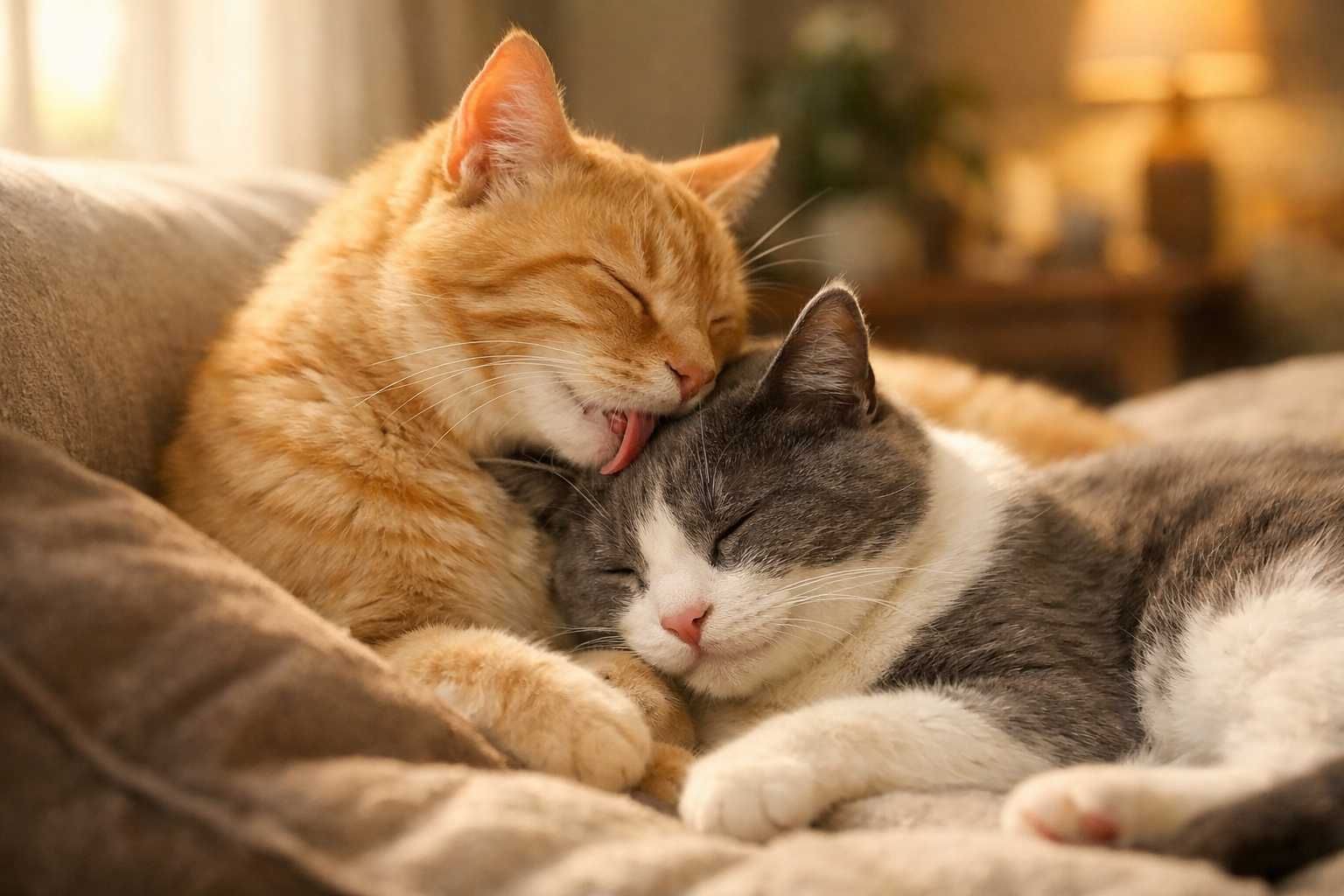
They Groom Each Other
One of the clearest signs of a strong feline bond is mutual grooming, also called allogrooming.
Cats are selective about physical closeness, so when one cat licks the other’s head, ears, or face, it usually reflects trust and comfort. This isn’t just about cleanliness. It’s also a social behavior that helps strengthen relationships.
If you regularly see one cat gently grooming the other, especially when both seem calm and relaxed, that’s a very positive sign.
They Sleep Close Together, Especially Touching
Cats are most vulnerable when they sleep, so they tend to choose resting spots where they feel safe.
If your cats nap near each other, that’s already a good sign. If they regularly sleep while touching, curled together, or draped over one another, that suggests an even deeper level of trust. Physical contact during sleep is one of the sweetest and most reliable signs that two cats feel secure together.
They Exchange Slow Blinks
Slow blinking is often described as a cat’s way of showing trust and relaxation.
When cats slow blink at each other, it usually means they feel comfortable and safe in one another’s presence. It may not happen often enough for you to catch it easily, but if you do notice it, it’s a lovely sign that their relationship is warm and peaceful.
They Greet Each Other Calmly
Friendly feline greetings often include nose touches, sniffing, or approaching with a relaxed posture.
A nose-to-nose greeting is typically a good sign, especially if neither cat seems tense or defensive. You may also notice one or both cats approaching with their tails held upright, which usually signals confidence and friendliness.
Calm, relaxed greetings show that your cats are comfortable reconnecting after time apart.
They Play Without Escalating Into a Fight
Cat play can look rough, especially when chasing, wrestling, and pouncing are involved. That doesn’t automatically mean there’s a problem.
The difference between healthy play and real conflict usually comes down to body language and what happens afterward. Bonded or well-matched cats may play intensely, but they usually remain loose and controlled. There’s no prolonged screaming, no sustained aggression, and no obvious fear. When the play ends, both cats settle quickly and return to normal.
If your cats can roughhouse and then calmly walk away, that’s a strong sign they understand each other well.
They Eat Near Each Other Without Stress
Because food is a valuable resource, many cats are cautious around other cats at mealtime.
If your cats can eat near each other without growling, staring, guarding bowls, or trying to push one another away, that suggests a solid level of trust. They don’t have to share a bowl to be bonded, and in fact, separate bowls are still best. What matters is that they can eat comfortably in each other’s presence.
They Choose to Be Near Each Other
One of the most meaningful signs of a bond is voluntary companionship.
Do your cats seek each other out? Does one settle in a room only after the other arrives? Do they follow each other around the house or regularly choose the same resting spots?
When cats repeatedly choose to spend time together, it shows they’re doing more than simply coexisting. They enjoy each other’s company.
They Share Spaces Peacefully
During the introduction phase, shared territory can be a major source of tension. Favorite spots like cat trees, beds, sofas, and windowsills often become unofficial battlegrounds.
Once cats are bonded, that tension usually fades. They may still have preferences, but they can share valued spaces without posturing, staring, or trying to force the other away. If your cats comfortably lounge together in the same bed or sit side by side in the same sunny spot, that’s an excellent sign.
They Seem to Comfort Each Other
Some bonded cats show what looks very much like emotional support.
For example, one cat may go sit near the other during a stressful event, such as a thunderstorm, loud visitors, or a trip to the vet. While not every bonded pair shows this behavior, it can be a powerful sign of attachment when they do.
Cats may not express care in the same way humans do, but they often show it through quiet presence and closeness.
Their Body Language Is Relaxed Around Each Other
Body language can tell you a lot about how your cats truly feel.
Signs of comfort include:
- Soft eyes
- Forward or neutral ears
- Loose, relaxed posture
- A naturally held tail
- Calm movement around one another
If your cats consistently look relaxed in each other’s presence, that’s one of the strongest indicators that they feel safe together. A bonded pair doesn’t need to be constantly cuddling. Sometimes the clearest sign is simply how calm they are around one another.
How Long Does It Take for Cats to Bond?
There’s no single timeline.
Some cats become close within a few weeks, while others take months. In some cases, cats may never become deeply attached but still learn to live together peacefully. That’s completely normal too.
A true bond can’t be forced. The best approach is to give them time, keep interactions positive, and allow the relationship to develop at its own pace.
What If Your Cats Aren’t Fully Bonded Yet?
If your cats aren’t showing these signs yet, don’t worry. Many cats need extra time to feel secure.
You can help encourage a closer relationship by:
- Feeding them within sight of each other, at a distance they both find comfortable
- Using interactive play sessions to create positive shared experiences
- Swapping bedding or blankets so they become more familiar with each other’s scent
- Giving each cat individual attention to prevent stress or insecurity
- Making sure there are enough resources, including litter boxes, beds, scratching posts, food stations, and hiding spots
- Staying patient and avoiding pressure
Often, steady progress matters more than dramatic moments.
Final Thoughts
Watching two cats go from strangers to companions is incredibly rewarding. The early stress of introductions can feel long in the moment, but it becomes much easier once you start noticing the small signs of trust, comfort, and affection.
If your cats groom each other, sleep together, play well, and seek each other out, there’s a good chance they’ve formed a genuine bond. And even if they’re not there yet, that doesn’t mean they won’t get there in time.
Pay attention to the little things. In cat relationships, those small moments often mean the most.