
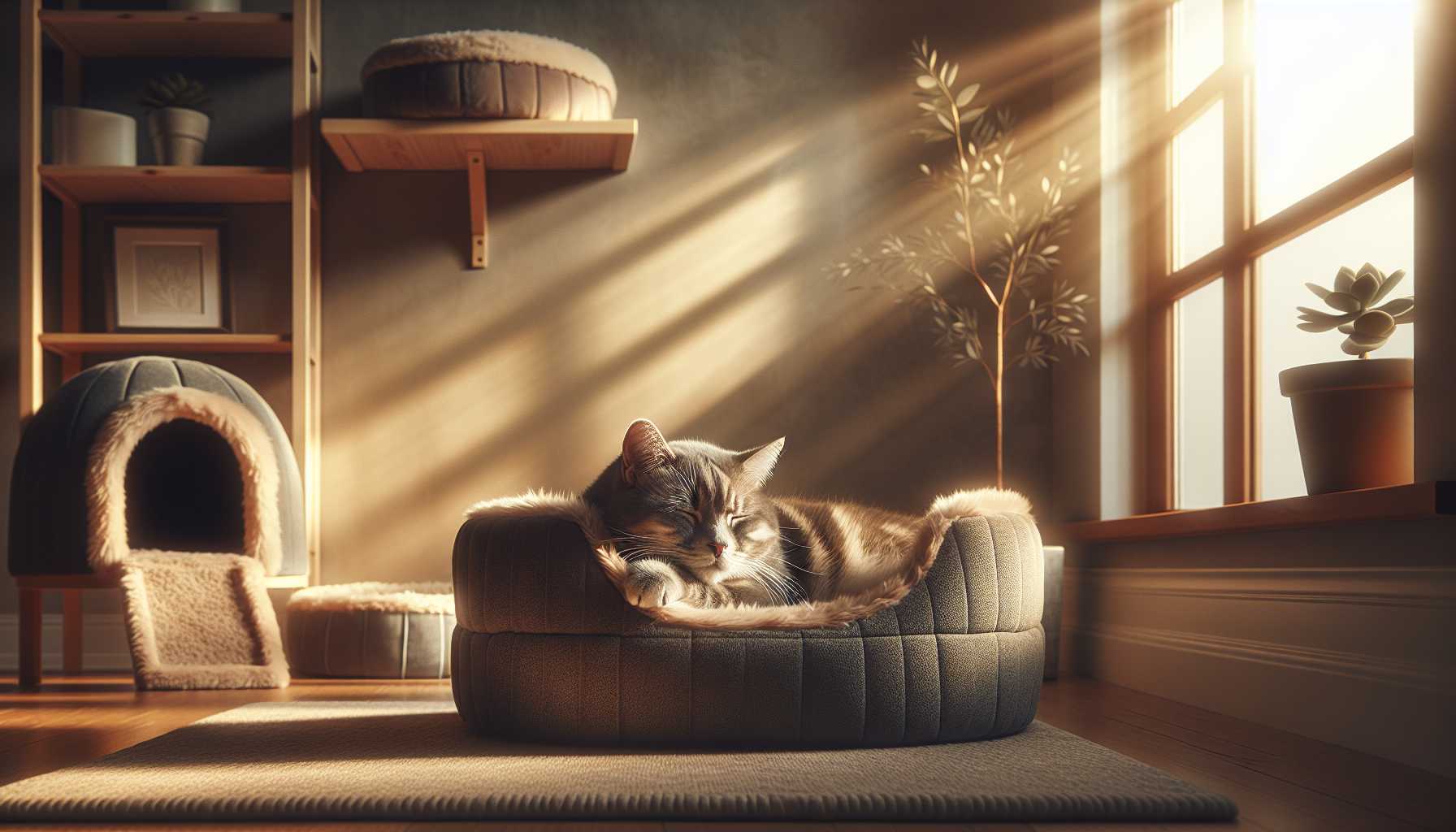
Similar to humans, cats also undergo changes in their sleep patterns as they age. If you’ve observed an alteration in your older cat’s slumber habits, know that it’s a common occurrence among aging pets. This article explores these changes and offers guidance on how to help our senior feline friends.
Impact of Aging on Cat Sleep Cycles
Think back to the days when your cat was young, buzzing around with energy, often in the middle of the night. With age, those days gradually fade. Elderly cats tend to sleep more, sometimes even reaching up to 20 hours a day. You might also notice a difference in their sleep cycles, with daytime napping becoming more prevalent.
Usual Sleep Variations in Senior Cats
In older cats, look out for the following changes in sleep behavior:
– Daytime deep sleep
– Activity during unconventional hours
– Difficulty finding a comfortable sleep position
– Seems disoriented upon waking up
Designing Comfortable Sleep Areas
Our aging fur buddies deserve cozy relaxation spots! Here are a few suggestions:
– Set up soft beds in warm, quiet corners
– Install stairs or ramps leading to their favorite perches
– Ensure sleep areas are clear of drafts
– Offer a variety of sleeping options at different levels
Recognizing Concerning Sleep Changes
Though increased sleep is expected, certain issues should prompt further investigation:
– Trouble finding a comfortable sleep position
– Excessive meowing or noise at night
– Restless behaviour or continuous pacing
– Major alterations to sleep patterns
Aiding Your Senior Cat’s Sleep Habits
Support your elderly cat in achieving better sleep with the following tips:
– Keep a regular daily routine
– Engage in gentle playtime before sleep
– Maintain a calm and controlled environment
– Make sure essential needs are easily accessible
The Importance of Regular Health Checks
As your cat ages, frequent vet visits become even more crucial. Your vet can:
– Diagnose any age-related disorders
– Manage any pain that could be impacting sleep
– Recommend suitable supplements
– Monitor overall health
Adapting Together to the Changes of Age
Remember, each cat ages uniquely. What might work for one may not be effective for another. Staying vigilant and patient during these changes is key.