
SEO Slug: how-to-separate-bonded-cats
Focus Keyphrase: how to separate bonded cats
Meta Description: Wondering how to separate bonded cats? Learn when separation may be necessary, what experts say, and how to make the transition as gentle and safe as possible for both cats.
So, you have two cats who seem inseparable. They sleep curled up together, groom one another, and trail each other through the house like little furry shadows. Now something has changed, and you’re wondering whether separating them is ever safe—or ethical.
First, take a breath. Asking this question does not make you a bad pet owner. Sometimes life changes in ways we don’t expect, and difficult decisions follow. What matters most is approaching the situation thoughtfully, honestly, and with your cats’ welfare at the center of it.
Let’s walk through what bonded cats are, when separation may be necessary, and how to handle it as gently as possible.
What Does It Mean When Cats Are “Bonded”?
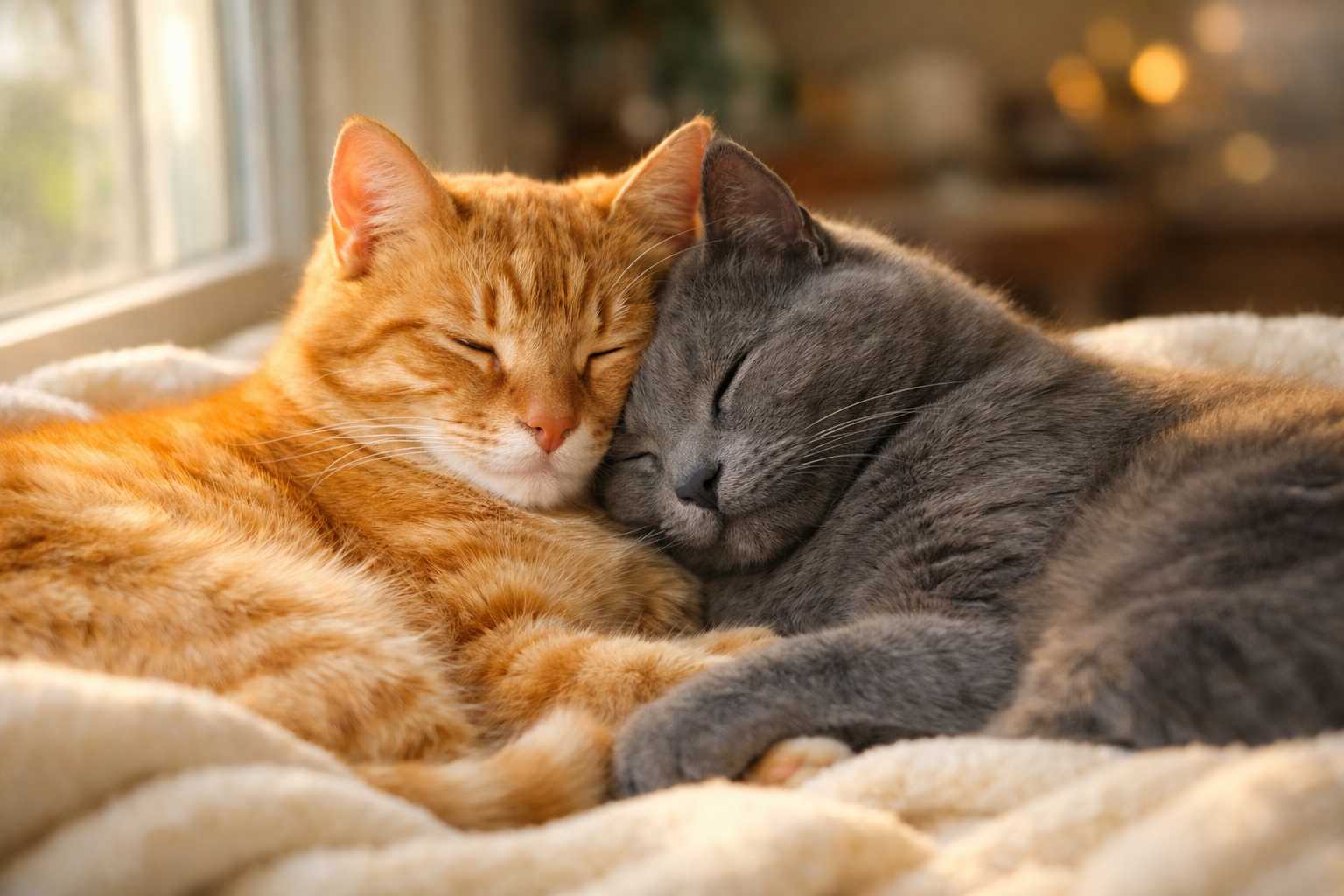
Bonded cats are more than cats who simply tolerate each other or share a home peacefully. A bonded pair has a close social attachment and often relies on that relationship for comfort, security, and routine.
Common signs of a bonded pair include:
- Sleeping together regularly
- Grooming each other often
- Seeking each other out for comfort or play
- Following each other around the home
- Becoming stressed when briefly separated
- Resting close to each other even when not interacting
That said, it’s important to be realistic: not every friendly pair is truly bonded. Some cats coexist beautifully without being deeply dependent on one another. This distinction matters, because separating a genuinely bonded pair is usually harder on the cats than separating cats who are simply compatible companions.
Why Do People End Up Considering Separation?
There are many reasons someone may need to separate two cats, and most of them come from real-life constraints rather than lack of care.
Common situations include:
- Housing rules that limit the number of pets
- Moving in with someone who has severe allergies
- Financial hardship that makes caring for two cats impossible
- A medical condition that requires one cat to be housed separately
- Divorce or breakup, where each person keeps one cat
- A major change in the relationship between the cats, including fear or aggression
These situations are painful, but they are also common. Needing to ask this question does not make you cruel. It means you’re trying to make the best decision in a difficult situation.
Is It Safe to Separate Bonded Cats?
Sometimes—but not without risks.
Separating bonded cats can lead to stress, grief-like behavior, anxiety, appetite changes, and behavioral problems. For some cats, the adjustment is manageable. For others, it can be significant. There is no guarantee either way.
Several factors affect how well cats cope with separation:
Age
Younger cats are often more adaptable, especially if the bond is still relatively new. Senior cats or cats who have spent most of their lives together may have a much harder time adjusting.
Length and Strength of the Bond
Cats who have lived together for many years, especially littermates or cats raised together from kittenhood, may be more affected by separation than cats who became close more recently.
Personality and Resilience
Some cats are naturally confident and independent. Others are more sensitive, routine-oriented, or socially attached. A cat’s temperament plays a major role in how they respond.
Quality of the New Home
A calm, patient, enriched home can make a huge difference. A stressful or unstable environment can make separation much harder.
Overall Health
Cats who are older, medically fragile, or already stressed may struggle more with a major change. Stress can also worsen existing health issues, so veterinary input is important.
In short, separation is not always disastrous—but it should never be treated as emotionally neutral.
Is It Ethical to Separate Bonded Cats?
In most cases, separating a truly bonded pair should be a last resort.
Animal welfare professionals, shelters, and cat behavior experts generally agree that bonded cats should stay together whenever possible. Cats can form meaningful social attachments, and breaking those attachments can have real emotional and behavioral consequences.
However, ethics are rarely black and white. If the alternative is homelessness, neglect, chronic instability, untreated medical needs, or a dangerous environment, then separation may be the more responsible option.
A helpful way to think about it is this: the ethical question is not simply, “Is separation bad?” It is, “What option causes the least harm and offers each cat the best chance of a stable, safe life?”
Before moving forward, ask yourself:
- Have I explored every realistic alternative?
- Is this truly necessary, or just more convenient?
- Will both cats be safe, cared for, and emotionally supported?
- Can I work with a vet or behavior professional during the transition?
- Would rehoming them together be possible instead?
If you’ve seriously considered these questions, you’re already approaching the situation with care and integrity.
Signs a Cat Is Struggling After Separation
Cats don’t always show distress in obvious ways. Some become vocal or clingy, while others withdraw quietly.
Watch for:
- Loss of appetite or eating much less than usual
- Hiding more than normal
- Sleeping excessively or seeming unusually inactive
- Increased vocalization
- Litter box problems
- Overgrooming or hair loss
- Restlessness or pacing
- Reduced interest in play or social interaction
- Aggression, irritability, or fearfulness
These signs are not always caused by grief alone—they can also signal illness. Any sudden change in appetite, energy, grooming, or litter box habits should be discussed with a veterinarian.
How to Separate Bonded Cats as Gently as Possible
If separation truly cannot be avoided, the goal is to reduce stress and preserve as much stability as possible.
1. Rule Out Other Options First
Before you make the final decision, look carefully at every realistic alternative. Can the cats be kept together with help from family, a temporary foster, financial assistance, or a different housing arrangement? In many cases, preserving the bond is the best outcome.
2. Talk to Your Veterinarian
This should be one of your first steps, not your last. Your vet can help assess both cats’ health, identify stress-related risks, and recommend support such as pheromone diffusers, environmental changes, supplements, or medication when appropriate.
3. Be Honest About Which Cat Is Better Suited to Rehoming
If one cat is more confident, social, and adaptable, that cat may cope better with a new home. A shy, elderly, or medically vulnerable cat may do better staying in the more familiar environment. This is not a hard rule, but it’s an important factor.
4. Choose the New Home Very Carefully
The right home matters enormously. Ideally, the adopter should be patient, experienced with cats, and willing to give the cat time to adjust. A quiet home is often easier than a busy one, especially in the early transition period.
5. Send Familiar Items With the Cat
Familiar scents can be deeply comforting. Send bedding, a blanket, favorite toys, or anything that smells like home. Scents help cats feel safer in unfamiliar surroundings.
6. Keep Routines Predictable
Cats do best with consistency. In both homes, try to keep feeding times, litter box setup, resting areas, and play routines stable. Predictability lowers stress.
7. Give Both Cats Extra Support
The cat leaving and the cat staying behind may both struggle. Offer more gentle attention, interactive play, hiding places, vertical spaces, and quiet reassurance. Don’t force interaction—just make security and comfort easy to find.
8. Monitor Both Cats Closely
Stay in contact with the new owner if possible. Watch for changes in eating, grooming, sleep, litter box use, and sociability in both cats. If either cat seems distressed for more than a short adjustment period, seek veterinary or behavioral guidance.
9. Be Cautious About “Practice Separations”
Short separations may help in some cases, but they can also confuse or stress cats further. There is limited evidence that this reliably eases permanent separation. If you try it, do so thoughtfully and only if it does not seem to increase distress.
Alternatives to Separation to Try First
If there is any chance of keeping bonded cats together, it is usually worth exploring.
Speak With Your Landlord or Housing Provider
Sometimes pet restrictions are negotiable, especially if you offer references, proof of veterinary care, or a pet deposit.
Look for Financial Assistance
Some charities, rescue organizations, and local pet food banks help owners facing temporary hardship. Assistance may include food, veterinary support, or short-term foster care.
Ask Friends or Family for Temporary Help
A trusted person may be able to foster both cats together while you stabilize your situation. Temporary support can prevent a permanent separation.
Rehome Them Together
If you truly cannot keep them, placing them together is often the kindest option. Many adopters are open to bonded pairs, especially when the cats are well-matched and their story is shared honestly.
Consult a Behavior Professional
If the issue is conflict, tension, or a change in the cats’ relationship, separation may not be the only solution. A qualified feline behaviorist may be able to help restore peace or identify whether the pair is still truly bonded.
What Do Cat Behavior Experts Say?
Most feline behavior professionals agree on a few core principles:
- Truly bonded cats should stay together whenever possible.
- Separation can cause measurable stress and behavioral changes.
- Not every pair that sleeps together is equally bonded.
- If separation is necessary, planning and aftercare matter a great deal.
- Medical or behavioral problems should not automatically be blamed on “sadness” without veterinary evaluation.
Experts also emphasize that grief in cats is real, but it may look different from human grief. A cat may become withdrawn, stop eating normally, vocalize more, or seem unsettled. Because these signs overlap with illness, a vet check is essential if symptoms appear.
How Long Does It Take Cats to Adjust?
There is no exact timeline.
Some cats begin settling into a new routine within a few weeks. Others may take months. A few may remain quieter or more sensitive long-term, even if they are otherwise coping well.
A general pattern might look like this:
- First 1-2 weeks: Stress is often highest
- Weeks 3-6: Some cats begin adjusting to new routines
- Months 2-4: Many cats become more settled and predictable
- Beyond 6 months: Most have adapted, though some personality changes may remain
The most important thing is not to expect immediate recovery. Adjustment takes time, consistency, and support.
If You’re Feeling Guilty
If you’re reading this because you’re facing this decision right now, it’s understandable to feel guilty, heartbroken, or overwhelmed.
But love is not measured by whether life stayed easy. Sometimes love means exhausting every option. Sometimes it means accepting that there is no perfect outcome and trying to choose the least harmful one.
If you are approaching this carefully, seeking advice, and prioritizing your cats’ welfare, you are acting responsibly—even if the decision is painful.
Final Thoughts
Bonded cats share a meaningful relationship, and separating them should never be done lightly. In general, keeping them together is the best and most humane choice. But in some situations, separation may be unavoidable.
If that happens, focus on minimizing stress: consult your vet, choose the new home with care, send familiar items, keep routines stable, and monitor both cats closely. And if there is any realistic way to keep them together—or rehome them as a pair—that option should come first.
This is a hard decision. But with planning, honesty, and compassion, you can give both cats the best possible support through the transition.
Have you been through this experience, or are you facing this decision now? Sharing your story may help someone else feel less alone.