
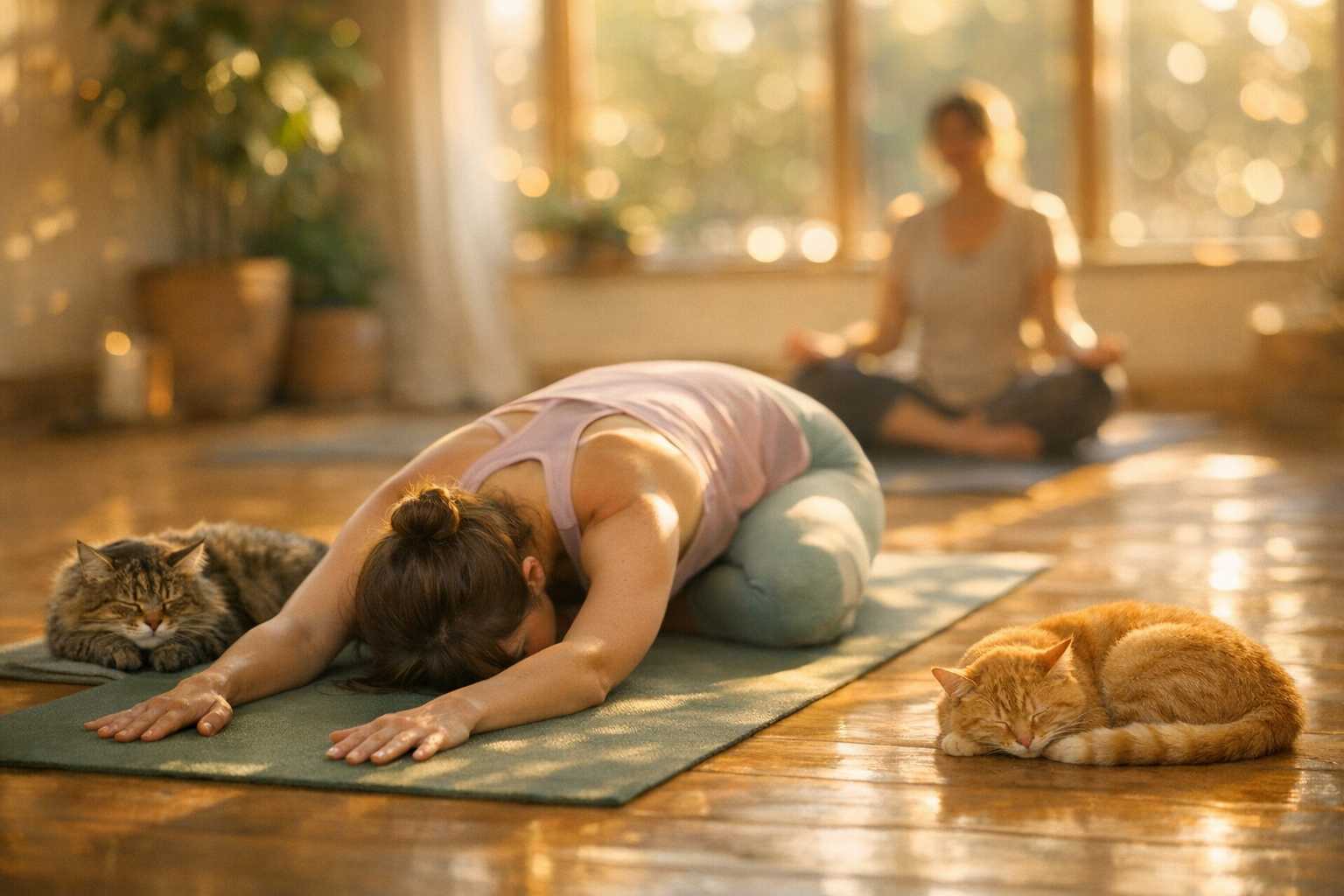
Have you ever tried to meditate while a cat strolls across your yoga mat?
If so, you already understand the charm.
Cat yoga therapy is one of the most comforting wellness trends to emerge in recent years. It combines the grounding benefits of yoga with the soothing presence of cats, creating an experience that can feel playful, calming, and deeply restorative.
Here’s a clearer, more balanced look at what cat yoga therapy is, how it may help with stress and anxiety, and what you can expect if you decide to try it.
What Is Cat Yoga Therapy?
Cat yoga therapy is the practice of doing yoga in a space where cats are present and free to interact with participants.
Sometimes a cat may curl up beside you. Sometimes one may climb into your lap or wander across your mat. That unpredictability is part of the experience.
At its core, cat yoga therapy blends gentle yoga with elements of animal-assisted wellness. The goal is not perfect posture or intense exercise. Instead, the focus is relaxation, mindfulness, emotional comfort, and connection.
Today, many cat cafés, rescue organizations, shelters, and boutique wellness studios offer cat yoga sessions, and their popularity continues to grow.
Why Cats Can Feel So Calming
The calming effect of cats is not just anecdotal. While research on cat-specific yoga is still limited, there is broader evidence showing that both yoga and positive interactions with animals can support stress reduction and emotional well-being.
The Soothing Effect of Purring
A cat’s purr typically falls within a frequency range of about 25 to 150 Hz. Some researchers have suggested that these vibrations may be associated with calming or healing effects, although stronger evidence is still needed before making firm medical claims.
What we do know is that the sound and sensation of a purr can be deeply soothing for many people.
Cats May Support Relaxation and Bonding
Spending time with animals can promote feelings of comfort, safety, and connection. Positive interactions with pets have been associated with lower stress levels and may support the release of oxytocin, a hormone involved in bonding and emotional regulation.
At the same time, these interactions may help reduce cortisol, the body’s primary stress hormone.
Gentle Touch Can Help the Nervous System Settle
Petting a calm, friendly cat can be reassuring and grounding. For many people, this kind of touch helps activate the body’s relaxation response, easing tension and encouraging a greater sense of calm.
How Cat Yoga Therapy May Help Reduce Stress and Anxiety
Cat yoga therapy offers more than a cute photo opportunity. For many people, it can create a meaningful shift in mood and stress levels.
It Encourages Mindfulness
Cats are naturally curious and unpredictable. If a kitten hops onto your mat during child’s pose, your attention immediately returns to the present moment.
Instead of replaying worries or thinking ahead, you’re simply there, breathing, smiling, and responding to what’s happening now. That is mindfulness in action.
It Can Help the Body Slow Down
Yoga is already known to support relaxation by encouraging slower breathing, body awareness, and a calmer nervous system. Adding the presence of friendly cats can make the environment feel even more comforting.
Animal-assisted activities have been linked to reductions in heart rate, blood pressure, and perceived stress in some settings.
It Takes the Pressure Out of Yoga
Traditional yoga classes can feel intimidating, especially for beginners.
Cat yoga tends to be much more relaxed. No one expects perfect form when a cat is pawing at your sleeve or stretching out across your mat. The atmosphere is usually light, welcoming, and forgiving, which can be especially helpful for people who feel self-conscious in standard fitness spaces.
It Creates Connection
Cat yoga is often social in a gentle, low-pressure way. People laugh together, talk about the cats, and share a warm experience that feels easy and genuine.
That sense of connection can be especially valuable for people dealing with stress, anxiety, or loneliness.
Possible Mental Health Benefits of Cat Yoga Therapy
Cat yoga therapy is not a substitute for professional mental health care, but it may be a helpful complementary practice for some people.
It May Support Mood
Physical movement, mindful breathing, and positive animal interaction can all contribute to improved mood. Together, they can create a gentle and uplifting experience that may help people feel a little lighter emotionally.
It May Help People Feel More Grounded
For people living with chronic stress or trauma-related symptoms, calm environments and slow, predictable movement can be supportive. The presence of animals may also provide a sense of comfort and safety.
That said, experiences vary, and anyone managing PTSD or severe anxiety should approach new wellness practices in a way that feels emotionally safe and supportive.
It Can Strengthen Emotional Regulation
Yoga teaches breath awareness and body awareness. Cats, in their own way, encourage flexibility and acceptance. You cannot fully control the environment, and that becomes part of the lesson.
Learning to stay calm through small interruptions can translate into greater emotional resilience off the mat as well.
It May Ease Loneliness
Even brief, positive experiences of connection can matter. Cat yoga offers connection on multiple levels: with your body, with the animals, and with other people in the room.
For many participants, that sense of warmth and belonging is one of the most meaningful parts of the experience.
What to Expect in a Cat Yoga Session
If you’re curious about trying it, here’s what a typical session often includes.
The Setting
Cat yoga sessions are commonly held in:
- Cat cafés
- Animal shelters or rescue centers
- Boutique yoga studios
- Community wellness spaces
The environment is usually designed to be safe and comfortable for both people and cats. In well-run sessions, cats are free to approach participants on their own terms and are never forced to interact.
The Structure
Most classes last about 45 to 75 minutes, though some may run longer. A common format includes:
- A brief welcome and introduction
- Gentle stretching or breathing exercises
- A beginner-friendly yoga flow
- Quiet time or informal interaction with the cats
- Final relaxation, often in savasana
The pace is usually slow and accessible.
The Experience Level
Most cat yoga classes are designed for beginners. The emphasis is on ease, enjoyment, and presence rather than performance.
The Cats
In shelter-based classes, the cats may be available for adoption. These sessions can help the animals become more comfortable around people while also giving participants a chance to connect with them in a calm setting.
Sometimes, those connections turn into permanent homes.
Tips for Getting the Most Out of Cat Yoga Therapy
A few small choices can make the experience more enjoyable for both you and the cats.
Wear Comfortable, Practical Clothing
Choose soft, flexible clothes that you don’t mind getting covered in fur. Avoid delicate fabrics, since claws and loose threads are not always a great match.
Avoid Strong Scents
Perfume, heavily scented lotion, and strong essential oils can be overwhelming for cats. It’s best to arrive with minimal fragrance.
Let the Cats Set the Pace
Try not to pick up, chase, or crowd the cats. Let them come to you if they want to. Respecting their space helps create a calmer environment for everyone.
Expect Imperfection
Your flow may be interrupted. A cat may sit exactly where your hands need to go. Another may decide your mat is now theirs.
That’s not a disruption to the experience. It is the experience.
Focus on Your Breath
Slow, steady breathing can deepen the calming effects of the session. If the room feels lively or distracting, returning to your breath can help you stay grounded.
Can You Practice Cat Yoga Therapy at Home?
Yes, absolutely.
If you live with a cat, you can create your own version of cat yoga at home. It may not be exactly the same as a group class, but it can still be relaxing and enjoyable.
Create a Calm Space
Set up your mat in a quiet room and begin your practice without forcing your cat to join in. If they’re curious, they’ll likely come investigate on their own.
Try Cat-Friendly Poses
Some poses naturally invite feline companionship, including:
- Child’s pose — many cats enjoy settling near your back or arms
- Cat-cow — a playful and fitting pose if your cat wants to observe
- Savasana — ideal for quiet rest, especially if your cat curls up nearby
- Seated forward fold — some cats love a lap-level position
Keep the Atmosphere Gentle
Soft instrumental music, low lighting, and a slow pace can help make the space feel peaceful for both of you.
Be Flexible
Some days your cat may want to be involved. Other days they may ignore you completely. Either way, allow the practice to be simple and natural.
How to Find a Cat Yoga Class Near You
If you’d like to try an in-person session, here are a few good places to start:
- Search online for terms like “cat yoga near me”
- Check local cat cafés and rescue organizations
- Look at shelter event calendars
- Browse Eventbrite, Meetup, or community wellness listings
- Ask local yoga studios if they host specialty animal-assisted classes
Because these events are often small and popular, it’s a good idea to book early.
Can Cat Yoga Benefit the Cats Too?
In many cases, yes, especially in thoughtfully managed shelter or rescue settings.
Potential benefits for cats may include:
- Increased positive human interaction
- Gentle socialization
- Environmental enrichment
- Greater visibility for adoption
However, the cats’ welfare should always come first. Sessions should be structured around the animals’ comfort, with plenty of space, rest, and the freedom to opt out.
When done responsibly, cat yoga can be rewarding for both people and cats.
Is Cat Yoga Therapy Right for You?
Cat yoga therapy may be a good fit if you:
- Feel stressed or anxious
- Enjoy animals but do not have a pet at home
- Find standard yoga classes too serious or intimidating
- Want a wellness activity that feels social, light, and accessible
- Are looking for a gentle way to practice mindfulness
It may also be a lovely option if you simply want a little more ease and joy in your routine.
If you have allergies, a fear of animals, or sensory sensitivities, though, this type of class may not be the best match.
Final Thoughts
Cat yoga therapy is more than a quirky idea.
At its best, it offers a calming mix of mindful movement, animal companionship, and human connection. While more research is needed on cat yoga specifically, both yoga and positive animal interaction have well-established stress-relieving potential.
Whether you attend a class at a local shelter or stretch at home with your own cat nearby, the appeal is easy to understand: it invites you to slow down, smile, and be present.
And sometimes, that alone can be surprisingly healing.
So if a cat ends up sitting on your yoga mat, you might consider it part of the lesson.