
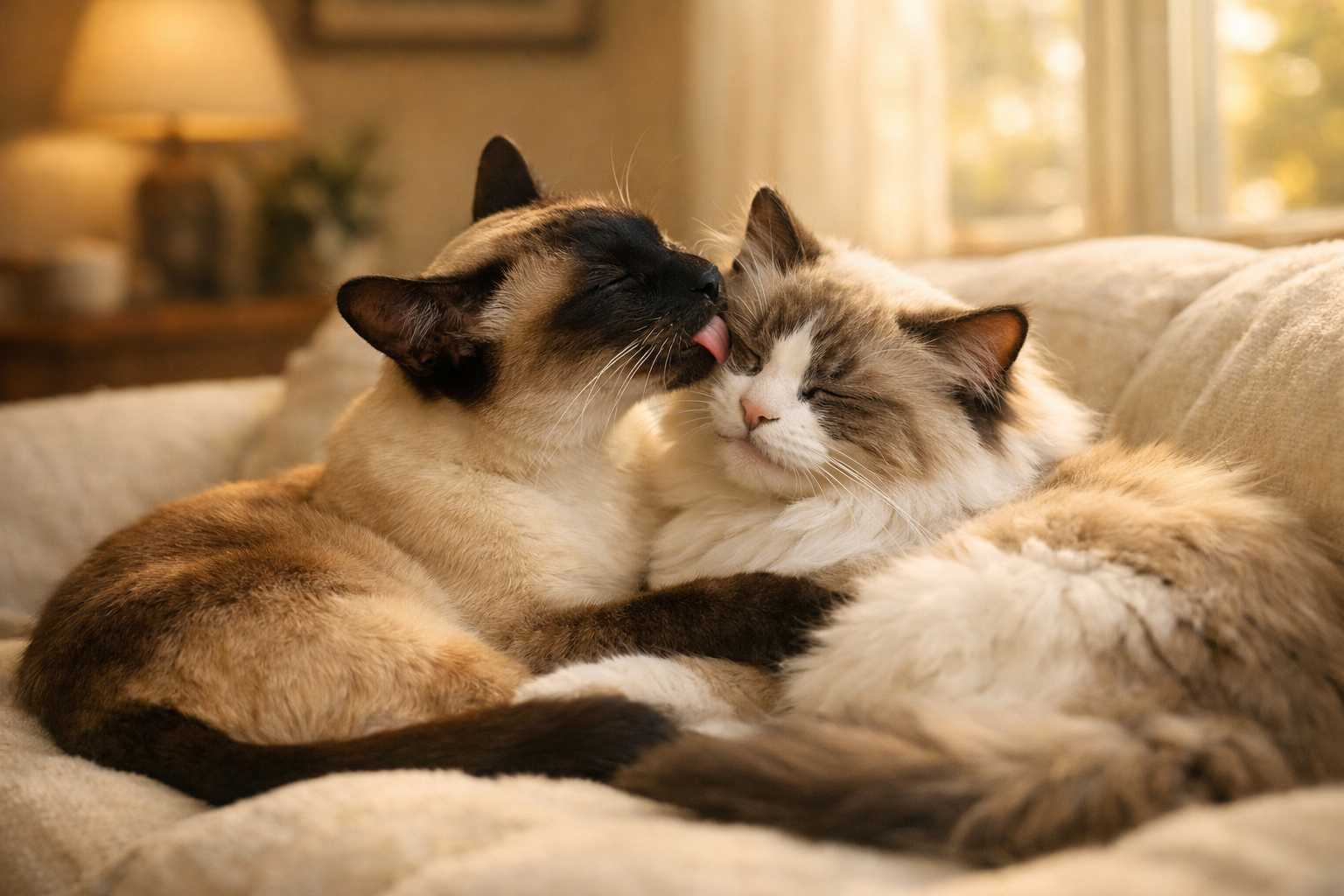
Have you ever watched two cats curl up together, groom each other, and fall asleep side by side? It is hard not to melt.
While some cats are perfectly content being the only pet in the home, others are far more social and often do best with a feline companion. If you are considering adopting two cats, or introducing a second cat to your household, choosing a breed known for its sociable nature can make the transition much easier.
In this guide, we will look at some of the best cat breeds that are especially known for being affectionate, social, and more likely to form close bonds with other cats.
What Is a Bonded Pair?
A bonded pair is two cats that have developed a strong social attachment to one another. They may sleep together, groom each other, play together, and seek each other out for comfort and security.
In true bonded pairs, separation can be stressful and upsetting. This is why shelters and rescue groups often prefer to adopt bonded cats out together.
It is also important to note that breed alone does not determine whether two cats will bond. Early socialization, personality, age, and the way the cats are introduced all play a major role. Still, some breeds are generally more social and companion-oriented than others.
Why Adopt a Bonded Pair?
Adopting a bonded pair can be a wonderful choice for both cats and owners. In many cases, two well-matched cats can help each other feel more secure and enriched.
Benefits may include:
- More companionship and less loneliness
- Built-in play and social interaction
- Mutual grooming and comfort
- Reduced boredom, especially in active breeds
- Easier adjustment when left home alone for part of the day
Of course, two cats also mean double the responsibility, so it is important to be sure you have the time, space, and budget for both.
1. Siamese
Siamese cats are highly intelligent, vocal, and deeply affectionate. They tend to form strong attachments to their humans, but many also enjoy close relationships with other cats.
Because Siamese are so social and interactive, they can become lonely or stressed if left alone for long periods. A compatible feline companion can provide the stimulation and comfort they often crave.
A well-matched Siamese pair is often playful, expressive, and extremely close. If you choose this breed, expect a lively household and plenty of conversation.
2. Ragdoll
Ragdolls are known for their gentle, easygoing nature. They are affectionate cats that generally enjoy company, whether from people or other pets.
Their calm temperament often makes them a good fit for multi-cat homes, and they are typically tolerant and relaxed around other friendly cats. Many Ragdolls enjoy curling up with a companion and sharing quiet time together.
If you are looking for a breed that is sweet, affectionate, and generally accepting of feline companionship, the Ragdoll is a strong choice.
3. Burmese
Burmese cats are among the most social cat breeds. They are affectionate, people-oriented, and often dislike being left alone for extended periods.
Because they are so interactive and energetic, Burmese cats frequently do well in pairs. They often form strong bonds with other cats and enjoy both active play and close physical companionship.
For households where people are away during the day, a pair of Burmese cats may be much happier than a single cat.
4. Maine Coon
Maine Coons are large, friendly cats with a playful and sociable side. Although they are often described as independent enough to manage well on their own, many Maine Coons also get along very well with other cats.
They tend to be gentle, curious, and adaptable, which can make them excellent companions in multi-cat homes. Many enjoy having a playmate, especially if the other cat is respectful and similarly social.
Their easygoing nature can also make them a good match for households with a mix of pet personalities.
5. Tonkinese
The Tonkinese, developed from Siamese and Burmese lines, is known for being outgoing, affectionate, and highly social. These cats thrive on attention and interaction.
Because they are so engaged with both people and other animals, Tonkinese cats often do especially well with a feline companion. They are playful, energetic, and usually eager to be involved in whatever is happening around them.
A Tonkinese pair can be lively and entertaining, but also deeply affectionate with each other.
6. Abyssinian
Abyssinians are active, curious, and athletic cats. They are not usually lap cats in the traditional sense, but they are highly engaged with their environment and often enjoy interactive play with both people and other cats.
Because of their energy level, many Abyssinians benefit from having a compatible companion to play and explore with. A second cat can help provide the stimulation they need and may reduce boredom-related behavior.
They often do best with another playful, confident cat rather than a very timid or sedentary companion.
7. Bengal
Bengals are intelligent, energetic, and intensely curious. They need a great deal of mental and physical stimulation, and many enjoy the company of another active cat.
A well-matched companion can help a Bengal burn energy through play and provide valuable social interaction. However, because Bengals are so active, they are usually best paired with another confident, playful cat rather than a very calm or sensitive one.
Two Bengals, or a Bengal with another energetic breed, can be a great match in the right home, but owners should be prepared for a high activity level.
8. Birman
Birmans are gentle, affectionate, and generally sociable cats. They are often described as quiet and sweet-natured, and many adapt well to living with other cats.
Their balanced temperament makes them especially appealing for people who want a companionable but not overly demanding breed. Birmans often enjoy sharing space, lounging near each other, and forming calm, affectionate relationships with feline housemates.
They can be an excellent choice for homes looking for a peaceful and loving pair.
9. Devon Rex
Devon Rex cats are playful, people-oriented, and full of personality. They are known for being mischievous, curious, and highly interactive.
Because they crave attention and stimulation, they often benefit from having another cat in the home, especially one that enjoys play and close companionship. Many Devon Rex cats bond strongly with both humans and fellow pets.
If you want a pair of cats with big personalities and plenty of energy, this breed is worth considering.
10. Oriental Shorthair
Oriental Shorthairs are closely related to Siamese cats and share many of the same traits: intelligence, affection, vocal communication, and a strong need for social interaction.
These cats are often happiest when they have company, whether from people or from another cat. They tend to be emotionally expressive and can become lonely if left alone too often.
Because of their social nature, Oriental Shorthairs are among the breeds most likely to appreciate and even seek out a feline companion.
A Note on Scottish Folds
Scottish Folds are often described as sweet and easygoing. However, it is important to mention that the folded-ear trait is linked to a genetic cartilage disorder called osteochondrodysplasia, which can cause pain and joint problems. For that reason, many veterinarians and welfare organizations discourage intentionally breeding Scottish Folds.
If you admire their calm temperament, consider looking into other gentle, social breeds such as the Birman or Ragdoll instead.
Tips for Helping Two Cats Bond
Even social breeds do not automatically become best friends overnight. A successful relationship usually depends on a careful introduction and a good environment.
Here are a few important tips:
- Introduce cats gradually, starting in separate spaces
- Allow them to get used to each other’s scent before face-to-face meetings
- Use treats, toys, and calm praise to create positive associations
- Never force interaction
- Provide separate food bowls, litter boxes, water stations, and resting areas
- Make sure each cat has places to retreat and feel safe
Some cats bond quickly, while others take weeks or even months to settle into a comfortable relationship.
Should You Adopt an Already Bonded Pair?
In many cases, yes. Adopting an already bonded pair can be easier than trying to create a bond between two unfamiliar cats.
Shelters and rescues often have bonded pairs that must stay together. These cats already know and trust one another, which can make the transition into a new home less stressful for them.
If you have the resources to care for two cats, adopting a bonded pair can be a deeply rewarding choice.
Final Thoughts
Cats are often seen as independent, but many are far more social than people realize. Some breeds are especially likely to enjoy close feline companionship and may thrive with a compatible cat by their side.
Siamese, Ragdolls, Burmese, Maine Coons, Tonkinese, Abyssinians, Bengals, Birmans, Devon Rexes, and Oriental Shorthairs are all strong candidates for homes considering two cats.
That said, every cat is an individual. Personality, early experiences, and proper introductions matter just as much as breed. If your goal is to bring home a close pair, adopting a pre-bonded pair from a shelter or rescue is often the most reliable option.
If you are thinking about adopting, check with local shelters and rescue groups first. Many bonded pairs are waiting for a home where they can stay together.