
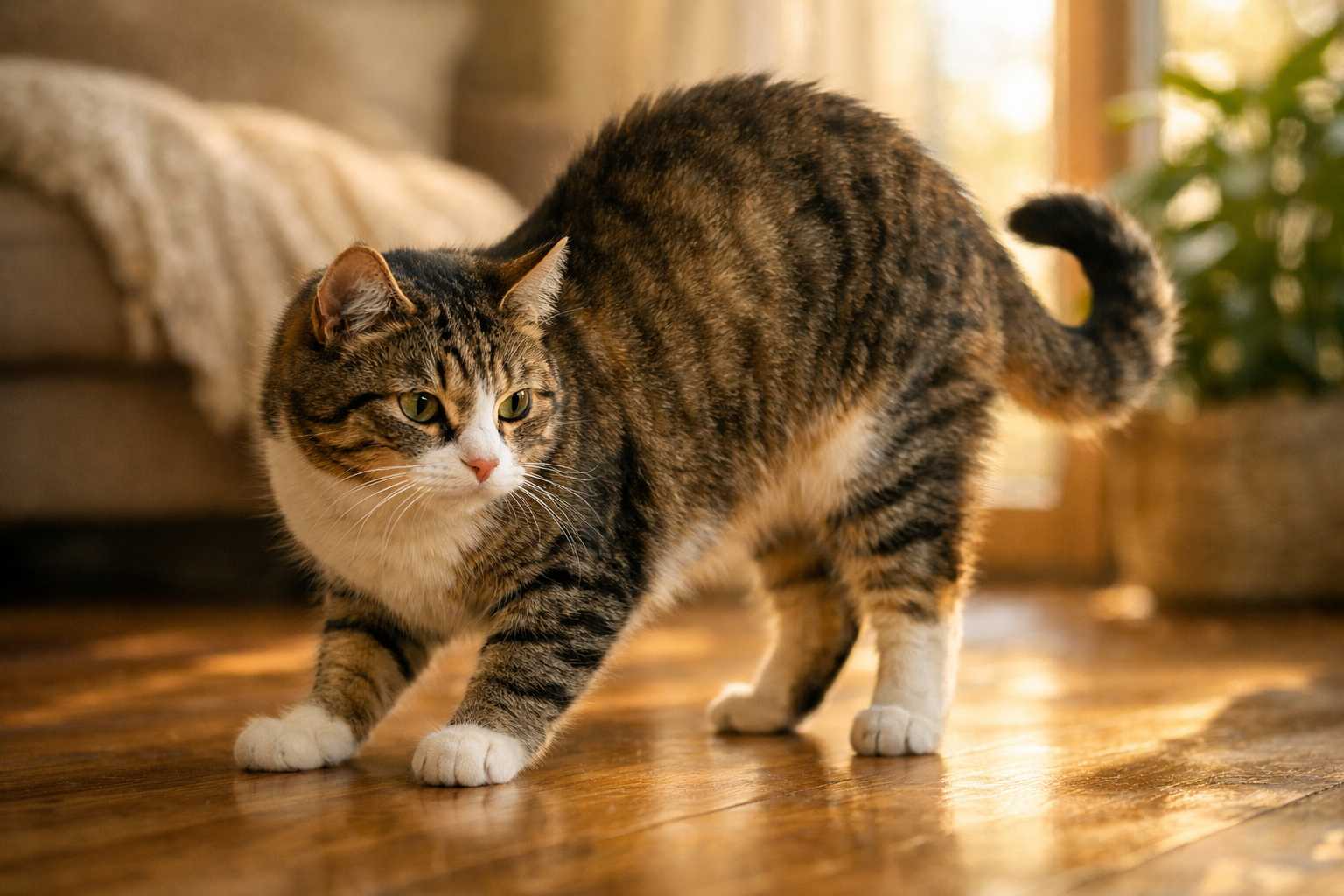
If you’ve ever seen your cat suddenly lift their back into that classic “Halloween cat” shape, you’ve probably wondered why they do it.
The good news is that an arched back can mean several very normal things. Depending on the situation, your cat may be feeling scared, playful, content, or simply stretching after a nap.
The key is not to focus on the arched back alone. To understand what your cat is really communicating, you need to look at the full picture: their tail, ears, fur, eyes, posture, and what’s happening around them.
The Short Answer
Cats arch their backs for a few main reasons:
- They feel frightened or threatened
- They’re stretching
- They’re feeling playful or excited
- They’re enjoying affection
- They may be in pain or discomfort
- Unspayed female cats may do it while in heat
In other words, the arch itself is not the message on its own. Context matters.
1. They Feel Scared or Threatened
This is the reason most people recognize right away.
When a cat feels frightened, they may arch their back to make themselves look larger and more intimidating. It’s a natural defensive response meant to help them protect themselves.
You may also notice:
- Puffed-up fur
- A bottle-brush tail
- A sideways stance
- Hissing or growling
- Flattened or pinned-back ears
- Wide pupils
This is known as a defensive posture.
If your cat is doing this, they are not being “dramatic.” They’re telling you they feel unsafe. The best response is to give them space and let them settle down on their own. Trying to pick them up or comfort them physically can make the situation worse.
2. They’re Stretching
Sometimes an arched back is nothing more than a satisfying stretch.
Cats sleep a lot, and after resting for hours, they often stretch their spine, shoulders, and legs when they wake up. A typical stretch may include:
- Rising from a nap
- Extending the front paws forward
- Lifting the hindquarters
- Arching the back
This kind of movement looks relaxed and fluid. The fur stays flat, the body stays loose, and the cat appears calm and comfortable.
If that’s what you’re seeing, there’s no cause for concern. Your cat is just loosening up.
3. They’re Feeling Playful
A playful cat may also arch their back, especially during bursts of excitement.
This is often the “sideways hop” or “crab walk” many cat owners know well. It can look dramatic, but it’s usually all fun.
Signs of a playful arch include:
- Bouncy sideways hopping
- Quick, light movements
- A tail that may puff slightly from excitement
- Forward ears
- Bright, alert eyes
- A playful pounce or chase immediately after
The difference between play and fear is body tension. A playful cat tends to look springy and animated. A frightened cat looks stiff, guarded, and ready to defend themselves.
4. They’re Enjoying Petting or Asking for More
Some cats arch their backs when you stroke them, especially along the spine or near the base of the tail.
In many cases, this means they’re enjoying the contact and leaning into it. They may be guiding your hand toward a spot they like.
You may also notice:
- Purring
- Rubbing against you
- Slow blinking
- Relaxed ears
- A calm, steady posture
That said, it’s important to pay attention to the rest of your cat’s body language. Not every cat likes the same kind of touch, and some become overstimulated quickly, especially near the lower back or tail base. If the tail starts lashing, the skin twitches, or the cat suddenly turns or walks away, it’s time to stop.
5. They May Be in Pain or Discomfort
An arched or hunched back can sometimes be a sign that something is wrong.
This is especially important if the posture seems stiff, persistent, or unusual for your cat. Pain-related posture is often less dramatic than a fearful arch and more of a tense, uncomfortable hunch.
Other warning signs can include:
- Reluctance to jump, climb, or move normally
- Hiding more than usual
- Loss of appetite
- Unusual vocalizing
- Changes in litter box habits
- A tense face or withdrawn behavior
Pain can come from many causes, including injury, arthritis, abdominal discomfort, or spinal problems. If your cat is repeatedly arching or hunching their back and you can’t explain why, it’s a good idea to contact your veterinarian.
6. An Unspayed Female Cat May Be in Heat
Female cats in heat may show a very specific posture called lordosis.
In this posture, the cat lowers the front of the body, raises the hindquarters, and arches the lower back. This is a normal hormonal mating response.
It’s often accompanied by:
- Loud or frequent vocalizing
- Rolling on the floor
- Increased affection
- Rubbing on furniture or people
- Treading with the back feet
- Holding the tail to one side
If your unspayed cat is showing these signs, speak with your veterinarian about spaying. Spaying not only prevents unwanted litters, but also supports long-term health.
How to Read the Whole Picture
The arched back only tells part of the story. To understand what your cat means, look at the rest of the body too.
| Body language | Likely meaning |
|—|—|
| Arched back + puffed fur + hissing | Fear or defensive aggression |
| Arched back + long, relaxed stretch | Normal stretching |
| Arched back + sideways hop + playful energy | Excitement or play |
| Arched back + purring + leaning into touch | Enjoyment or affection |
| Hunched back + withdrawn behavior | Pain, discomfort, or anxiety |
| Raised hindquarters + vocalizing + tail to the side | Female in heat |
What the Tail Can Tell You
Your cat’s tail adds important context.
Tail held upright with a soft curve: Usually friendly and confident
Puffed-up tail: Fear, high arousal, or excitement
Tail tucked close to the body: Anxiety or insecurity
Tail lashing or thumping: Irritation, overstimulation, or frustration
Tail held low and still: Fear, uncertainty, or possible discomfort
Tail language is especially helpful when you’re trying to tell the difference between a playful arch and a defensive one.
What the Ears Can Tell You
Ears are one of the clearest signals in cat body language.
Ears forward: Interested, curious, or playful
Ears turned sideways (“airplane ears”): Uneasy, annoyed, or overstimulated
Ears pinned back: Frightened, defensive, or aggressive
Relaxed ears: Calm and comfortable
A playful cat often has forward-facing ears. A frightened cat with an arched back usually has ears flattened or pinned back.
How to Respond
Once you understand why your cat is arching their back, it becomes much easier to respond appropriately.
If your cat is scared:
Stay calm, reduce noise or stress, and give them space.
If your cat is stretching:
No action needed. They’re just loosening up.
If your cat is playful:
Offer a toy, such as a wand toy or soft ball, and let them burn off energy.
If your cat is enjoying affection:
Continue gently, but watch for signs of overstimulation.
If you suspect pain:
Avoid handling them too much and contact your veterinarian.
Why This Matters
Cats are often described as mysterious, but they’re actually communicating all the time. Their signals can be subtle, and it’s easy to miss them if you don’t know what to look for.
Learning to read your cat’s body language helps you:
- Avoid misunderstanding fear or discomfort
- Recognize when your cat wants interaction
- Notice possible health problems earlier
- Build more trust over time
When you respond in ways your cat understands, they feel safer with you. That trust makes a real difference in your relationship.
Final Thoughts
So, why do cats arch their backs?
Most often, it comes down to one of a few things: fear, stretching, play, pleasure, discomfort, or heat-related behavior in unspayed females.
The meaning depends on the moment. Watch the whole cat, not just the spine. Look at the ears, tail, fur, eyes, and the situation around them.
With a little practice, cat body language becomes much easier to understand. And once you start noticing these signals, you’ll realize your cat has been communicating with you all along.