
SEO Slug: medical-care-bonded-cat-pairs-vet-visit-strategies
Focus Keyphrase: vet visit strategies for bonded cat pairs
Meta Description: Vet visits can be more challenging for bonded cat pairs. Learn practical, cat-friendly strategies to reduce stress, support their bond, and manage their health with confidence.
If you share your home with two cats who do everything together, vet visits can feel like a challenge. Bonded cats often eat together, sleep together, groom each other, and rely on one another for comfort. It is sweet to watch at home, but it can make medical appointments more complicated.
The good news is that with a little planning, vet care for bonded cat pairs can be much smoother. The goal is not only to protect each cat’s physical health, but also to reduce unnecessary stress and support the relationship that helps them feel safe.
Here is how to make vet visits easier for both cats and for yourself.
What Is a Bonded Cat Pair?
A bonded pair is two cats with a close social attachment. They are more than simple housemates. They seek each other out for comfort, companionship, and security.
Common signs of a bonded pair include:
- Sleeping close together
- Grooming one another
- Playing together often
- Following each other around the home
- Showing stress when separated
Not every pair of cats in the same home is truly bonded. But when that bond is strong, it should be taken into account during veterinary care.
Why Vet Visits Can Be Different for Bonded Cats
Most general vet advice is written with one cat in mind. Bonded pairs are different because separation itself can become a source of stress.
For some cats, even a short separation can lead to:
- Anxiety
- Increased vocalizing
- Reduced appetite
- Agitation or withdrawal
- Temporary changes in behavior
Stress may also affect parts of the exam, such as heart rate, respiratory rate, and blood pressure. That does not mean bonded cats cannot receive excellent care. It simply means their emotional needs deserve attention too.
Should Both Cats Go to the Vet Together?
In many cases, yes. If your cats are strongly bonded, bringing them together can be helpful, especially for routine appointments.
Potential benefits include:
- Less separation-related stress
- More comfort during travel and waiting
- A greater sense of security during the exam
- Fewer separate trips for you to manage
That said, this is not a one-size-fits-all rule. Some situations may call for separate visits, especially if one cat is highly reactive, very ill, or requires treatment that would be upsetting for the other cat to witness. The best approach is to ask your veterinarian what makes the most sense for your pair.
Choosing the Right Veterinary Clinic
Not every clinic handles bonded cats in the same way, so it helps to ask questions before booking.
Look for a clinic that:
Has experience with cats and multi-cat households. Staff who understand feline behavior are often better equipped to manage bonded pairs gently.
Uses cat-friendly handling techniques. Low-stress clinics often provide quieter spaces, softer restraint, and more time for anxious cats to settle.
Offers flexible scheduling. Back-to-back or shared appointments can make the visit easier.
Provides separate dog and cat waiting areas, or allows you to wait in the car if needed. Less noise and commotion usually mean less stress.
Is willing to note the bond in both medical records. This helps everyone on the care team understand your cats’ needs.
A good veterinary team will respect the bond while still focusing on each cat as an individual patient.
How to Prepare at Home Before the Appointment
A calm vet visit usually starts well before you leave the house.
Use the Right Carrier Setup
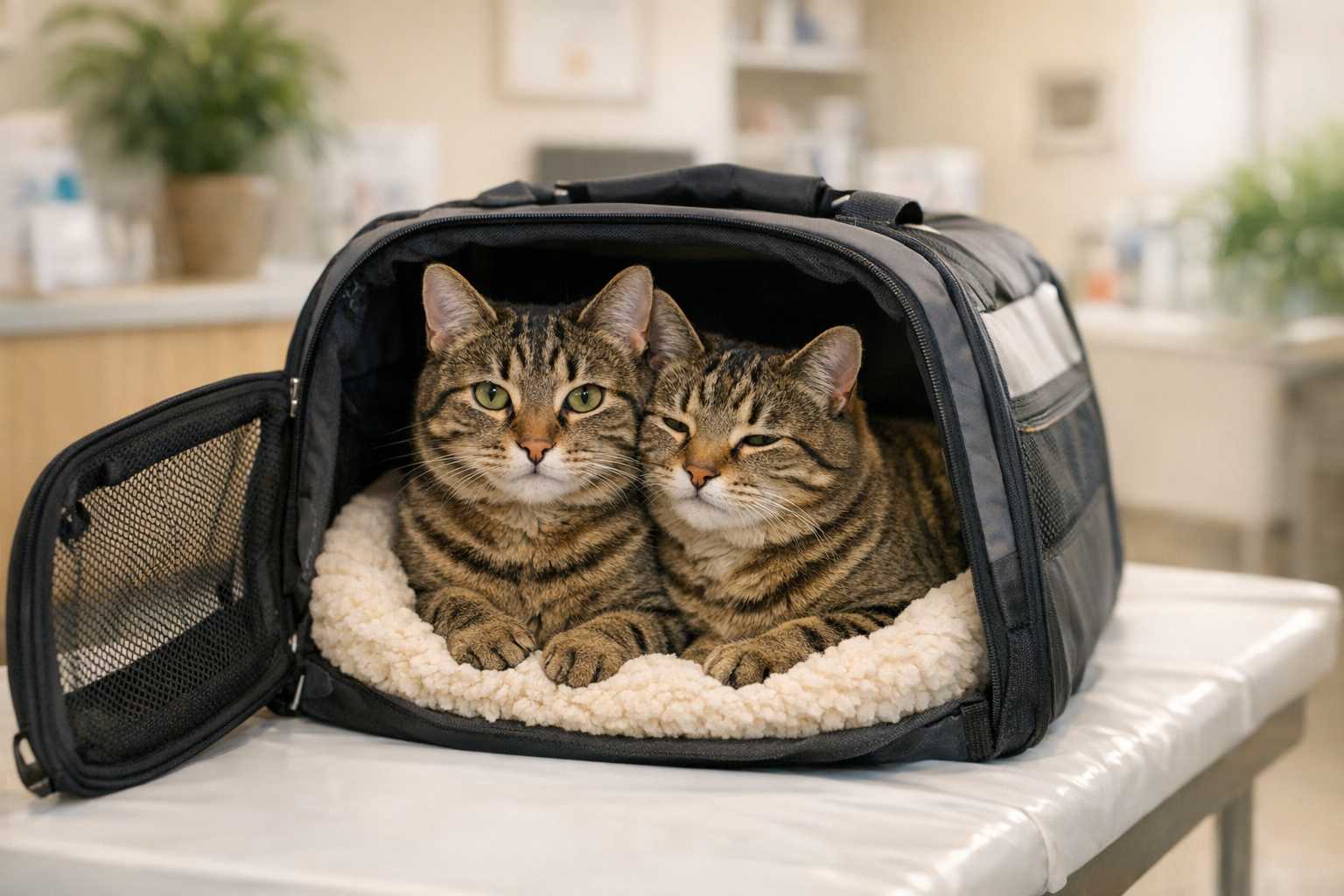
If your veterinarian agrees and both cats travel well together, a large, sturdy carrier may help them feel safer. It must be big enough for both cats to stand, turn around, and settle comfortably without crowding.
However, one carrier is not always the best choice. Some bonded cats become stressed in transit and may redirect that stress onto each other. For that reason, many veterinarians recommend separate carriers placed side by side, so the cats can still see, smell, and hear each other. Ask your clinic which option is safest for your pair.
Make Carriers Familiar
Do not wait until appointment day to bring the carriers out. Leave them open at home with soft bedding inside so they become part of the everyday environment.
You can also:
- Place treats inside
- Feed near or in the carrier
- Add bedding that smells like home
- Practice short, calm carrier sessions
This helps the carrier feel less like a warning sign and more like a safe resting place.
Consider Pheromone Products
A feline pheromone spray or diffuser may help reduce stress for some cats. If you use a spray, apply it to the bedding or carrier according to the product instructions, usually before the cats go inside. Never spray directly on your cat.
Ask About Food Instructions
Do not skip meals unless your veterinarian specifically tells you to. Some appointments require fasting, but many do not. If your cats are prone to motion sickness, mention that ahead of time so your vet can advise you.
What to Do During the Vet Visit
Once you arrive, a few simple choices can make a big difference.
Tell the Staff Your Cats Are Bonded
Do this when you book the appointment and again when you check in. It helps the team plan ahead and avoid unnecessary separation.
Request a Quiet Exam Room
If possible, ask to go straight into an exam room rather than sitting in a busy waiting area. This is especially helpful for nervous cats.
Keep Familiar Items Nearby
A towel or blanket from home can provide comfort through familiar scent. Covering part of the carrier can also help reduce visual stress.
Stay Calm and Speak Softly
Cats pick up on tone and body language. A calm voice and steady movements can help reassure them.
Ask Whether the Cats Can Remain Near Each Other
For some exams, it is helpful for the cats to stay in the same room. In other cases, the veterinarian may need to focus on one cat at a time. Flexibility matters here. Safety and accurate medical care should always come first.
Managing Different Medical Needs in a Bonded Pair
Even very close cats can have very different health needs. One may need medication, a prescription diet, or more frequent checkups while the other does not.
Keep Individual Records
Make sure each cat has clearly organized health information, including:
- Vaccination history
- Medications and doses
- Past illnesses or procedures
- Food preferences and restrictions
- Weight trends
- Lab results and veterinary notes
This is especially useful in homes where the cats look alike or share similar names.
Build a Medication Routine
If one cat needs treatment and the other does not, consistency helps.
Useful strategies include:
- Labeling medications clearly
- Using phone reminders
- Keeping a written treatment log
- Asking your vet about flavored medications, compounded forms, or long-acting options when appropriate
Never give one cat medication prescribed for the other unless your vet specifically instructs you to do so.
Handle Prescription Diets Carefully
If one bonded cat needs a special diet, feeding can become tricky.
Possible solutions include:
- Feeding meals in separate areas
- Using timed or microchip feeders
- Supervising meals until everyone finishes
- Asking your vet whether both cats can safely eat the same food
In some homes, a small feeding adjustment solves the problem quickly. In others, it takes trial and error.
If One Cat Needs to Stay at the Clinic
Hospitalization or surgery is often the hardest situation for bonded pairs.
The cat at home may:
- Search the house
- Cry more than usual
- Seem restless
- Eat less for a short time
- Act clingy or withdrawn
These reactions can be normal, especially in the first day or two.
To help the cat at home:
- Keep routines as normal as possible
- Offer extra play and attention
- Provide comforting bedding and familiar spaces
- Use enrichment like food puzzles or favorite toys
- Ask your clinic whether sending home a towel with the other cat’s scent might help
In some cases, a brief visit may be possible, but this depends on the clinic, the medical situation, and whether the visit would truly reduce stress rather than add to it. It is worth asking, but it is not always practical or recommended.
Reintroducing Bonded Cats After a Vet Visit
A cat returning from the clinic may smell unfamiliar because of disinfectants, medications, or stress-related scent changes. Even bonded cats may act unsure around each other for a little while.
This can sometimes lead to hissing, swatting, staring, or avoidance. It is often temporary.
Tips for a Smoother Reunion
Keep the environment calm. Bring the returning cat into a quiet, familiar room.
Use scent to your advantage. Gently swap bedding or use a soft cloth to share each cat’s scent.
Do not force interaction. Let them approach each other at their own pace.
Offer positive distractions. Treats, play, or a meal can help create a calmer association.
Monitor body language. Brief tension is common. Escalating aggression, prolonged stalking, or repeated fights mean you should slow the process down and give them more space.
If the conflict continues, ask your veterinarian or a qualified feline behavior professional for guidance.
Preventive Care Makes Vet Visits Easier
Routine care is one of the best ways to reduce stress over time. When cats visit the vet regularly, appointments are often shorter, more predictable, and less urgent.
Stay Current With Wellness Exams
Even cats who seem healthy should have regular checkups. Adult cats often benefit from yearly exams, while kittens, seniors, and cats with medical conditions may need more frequent visits.
Keep Vaccines and Parasite Prevention Up to Date
Your veterinarian can help you decide which vaccines and parasite prevention products are appropriate based on your cats’ age, lifestyle, and risk level.
Schedule Strategically
If it works for your clinic and your cats, booking appointments on the same day can reduce the number of stressful travel days each year.
Watch for Early Changes at Home
Subtle shifts can be important. Pay attention to changes in:
- Appetite
- Water intake
- Litter box habits
- Activity level
- Grooming
- Weight
- Social behavior
Early treatment is often simpler, less expensive, and less stressful.
Talk to Your Vet About the Bond
One of the most helpful things you can do is clearly explain your cats’ relationship to your veterinary team.
Let them know if your cats:
- Become distressed when separated
- Calm down when they can see each other
- Travel better together
- Have had trouble reuniting after past appointments
- Depend on each other during stressful situations
This information helps your vet tailor the visit and avoid preventable problems.
Create a Long-Term Health Plan for Both Cats
Bonded cats may share a life, but they still need individualized care. A strong long-term plan should support both the pair and each cat as an individual.
Work with your veterinarian to review:
- Age-specific wellness care
- Dental health
- Weight and nutrition
- Parasite prevention
- Chronic condition monitoring
- Senior care planning
- Stress reduction for future visits
When your plan considers both their bond and their separate medical needs, you are setting them up for healthier, calmer care over the long run.
Final Thoughts
Caring for bonded cat pairs at the vet takes a little extra thought, but it is absolutely doable. The key is to balance emotional comfort with practical medical care.
For many bonded cats, staying together as much as possible can reduce stress and make the experience easier. At the same time, it is important to stay flexible. The safest and most effective approach will depend on each cat’s temperament, health, and the reason for the visit.
With the right preparation and a veterinary team that understands feline behavior, vet visits can become far less overwhelming for everyone involved.
Your cats count on each other. With a thoughtful plan, they can count on you, too.
If this article helped you, consider sharing it with another cat owner who has a bonded pair.