
SEO Slug: do-bonded-cats-need-to-sleep-together
Focus Keyphrase: do bonded cats need to sleep together
Meta Description: Do bonded cats need to sleep together? Learn what bonded cat behavior really looks like, why some bonded pairs sleep apart, and how to create a comfortable home for both cats.
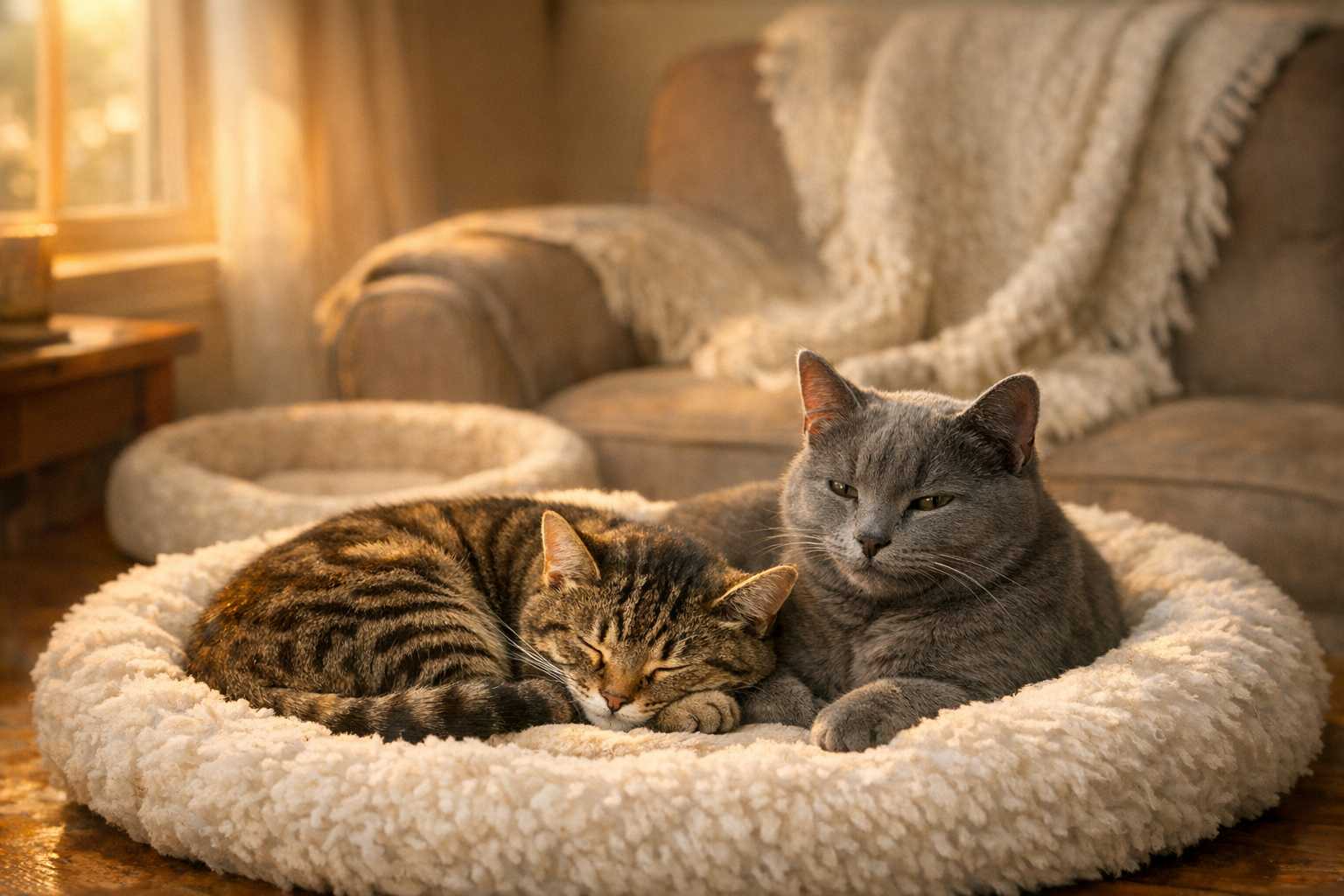
If you live with two cats who adore each other, you have probably seen them sleeping curled up together in a warm little heap. It is one of the sweetest sights in any cat-loving home.
That naturally leads many owners to wonder: do bonded cats need to sleep together?
The short answer is no. Bonded cats do not need to sleep together all the time to maintain their relationship. Still, sleeping close to each other can be one of the many ways they express trust, comfort, and affection.
In other words, sharing a bed can be a sign of a strong bond, but it is not the only sign, and it is not a requirement.
What Does It Mean for Cats to Be Bonded?
Bonded cats have a meaningful social connection that goes beyond simply getting along.
They often:
- groom each other
- play together regularly
- seek each other out for comfort or reassurance
- rest near one another
- show relaxed body language in each other’s presence
Some bonded cats are littermates. Others were introduced when they were young and formed a close relationship over time. In some cases, adult cats become strongly attached as well.
A true bond can shape many parts of their daily routine, including how they rest, interact, and respond to changes in the home.
Do Bonded Cats Always Sleep Together?
No, not always.
Even very closely bonded cats may choose to nap separately at times, and that is completely normal. Cats are social in ways many people do not realize, but they are also individuals with their own comfort preferences.
You may see a bonded pair sleeping:
- tightly curled up together
- side by side, touching
- close to each other without contact
- in different areas of the same room
- in completely separate sleeping spots
All of these patterns can be normal. What matters most is that the cats have the freedom to choose. Bonded cats often prefer some degree of proximity, but that does not always mean full-body cuddling.
Why Do Some Bonded Cats Sleep Separately?
There are several perfectly normal reasons bonded cats may not sleep together every night.
Temperature Preferences
One cat may seek out a sunny windowsill, while the other prefers a cooler, shaded corner. Comfort matters, and cats can be very particular about where they sleep.
Age and Life Stage
Kittens are more likely to pile together for warmth and security. As cats mature, they may still enjoy each other’s company but prefer a little more personal space.
Health or Physical Discomfort
A cat who is painful, sick, or uncomfortable may temporarily choose to sleep alone. If a cat’s sleeping habits change suddenly, especially along with other behavior changes, a veterinary checkup is a good idea.
Mood and Energy Levels
Cats, like people, do not feel the same every day. Sometimes they want close contact. Other times they simply want a quiet nap on their own.
Is It a Problem If Bonded Cats Stop Sleeping Together?
Not necessarily.
If your cats have never been the type to sleep in a pile, then sleeping apart may simply be their normal pattern. There is no reason for concern if the rest of their relationship remains warm and relaxed.
However, if two cats who used to sleep together regularly suddenly stop, it is worth paying attention. A change in sleeping behavior can sometimes point to:
- illness or pain in one or both cats
- stress in the home
- tension in their relationship
- environmental changes, such as moving house, new pets, guests, or renovations
Look at the bigger picture. Are they still grooming one another? Playing together? Choosing to rest near each other during the day? If so, the bond may still be intact. If you notice avoidance, irritability, hiding, or aggression, speak with your veterinarian or a qualified feline behavior professional.
How Much Proximity Do Bonded Cats Need?
Bonded cats benefit from emotional and social connection, but that does not mean they must share the exact same sleeping spot every night.
What matters more is that they:
- can access each other easily
- have opportunities to spend time together
- do not feel abruptly isolated from one another
- live in a safe, stable environment with enough resources
For bonded cats, closeness is more about availability and choice than about constant physical contact.
Should You Let Bonded Cats Share a Sleeping Space?
Yes, if they choose to.
It is best to let bonded cats decide for themselves whether they want to sleep together, nearby, or separately. Forcing them into one bed or restricting access to each other can create unnecessary stress.
Helpful options include:
- large cat beds with room for two
- cat trees with broad platforms
- soft blankets placed in favorite resting spots
- window perches for shared sunbathing
- access to your bed, if that works for your household
The goal is simple: provide comfortable choices and let the cats decide.
How to Create the Best Space for a Bonded Pair
The ideal setup supports both companionship and independence.
Offer More Than One Sleeping Spot
Even bonded cats appreciate variety. Multiple beds, blankets, or resting areas allow each cat to choose what feels best at that moment.
Make Resources Easy to Access
Food, water, litter boxes, and resting places should be easy for both cats to use without pressure or competition. In multi-cat homes, a common recommendation is to provide enough litter boxes and feeding areas to reduce tension.
Add Vertical Space
Shelves, cat trees, and elevated perches let cats stay close while maintaining personal space. Many cats feel safer when they have the option to observe from above.
Include Private Retreats
Bonded cats still need alone time. Covered beds, quiet corners, and hiding spaces help them rest without feeling disturbed.
Keep the Environment Predictable
Cats usually do best with routine. Keeping sleeping areas and daily rhythms fairly consistent can help bonded cats feel secure.
What Happens If You Separate Bonded Cats at Night?
Some owners keep cats out of the bedroom or place them in separate rooms overnight. Bonded cats may react differently depending on how strong their attachment is and what they are used to.
If two bonded cats normally sleep near each other, nighttime separation may lead to:
- increased vocalization
- restlessness
- scratching at doors
- frustration or anxiety
That said, some bonded cats adjust well to short periods apart, especially if they have learned that the separation is temporary and predictable.
If separation is necessary, introducing the change gradually is usually easier than making an abrupt switch.
Can Bonded Cats Become Too Dependent on Each Other?
Sometimes, yes.
A very close relationship can occasionally become unhealthy if one cat struggles to function calmly without the other. This is sometimes described as over-dependence.
Possible signs include:
- intense distress during brief separation
- loss of appetite when apart
- inability to relax, play, or rest alone
- panic when one cat leaves for veterinary care
This level of dependence can become a welfare issue, especially if one cat becomes ill, needs hospitalization, or passes away.
To support healthy confidence, it can help to encourage gentle independence through:
- separate play sessions
- individual enrichment activities
- occasional feeding in different nearby areas
- one-on-one attention with each cat
The goal is not to weaken their bond, but to make sure each cat can cope as an individual too.
Tips for Multi-Cat Homes With a Bonded Pair
In households with more than two cats, bonded pairs may show clear sleeping preferences. They may choose each other consistently, or they may sometimes rest with other cats as well.
What matters is that the overall group remains stable and low-stress.
Make sure:
- no cat is being excluded, chased, or bullied
- there are enough sleeping areas for everyone
- food, water, and litter boxes are not being guarded
- each cat gets individual attention and care
A bonded pair can thrive in a larger cat household, as long as the environment supports choice, safety, and access to resources.
The Bottom Line
Bonded cats do not need to sleep together all the time. What they do need is the ability to stay connected in ways that feel natural and comfortable to them.
Sleeping together is often a lovely sign of trust and affection, but it is only one expression of a bond. Grooming each other, playing together, resting nearby, and seeking each other out also matter.
The best thing you can do is create a home that offers both closeness and flexibility. Give your cats safe shared spaces, private retreats, and the freedom to choose where they rest.
In most cases, bonded cats will show you exactly what works best for them.
If you share your home with a bonded pair, you have probably noticed their own unique sleeping routine. Some love to cuddle every night, while others prefer a little space. Both can be perfectly normal.