
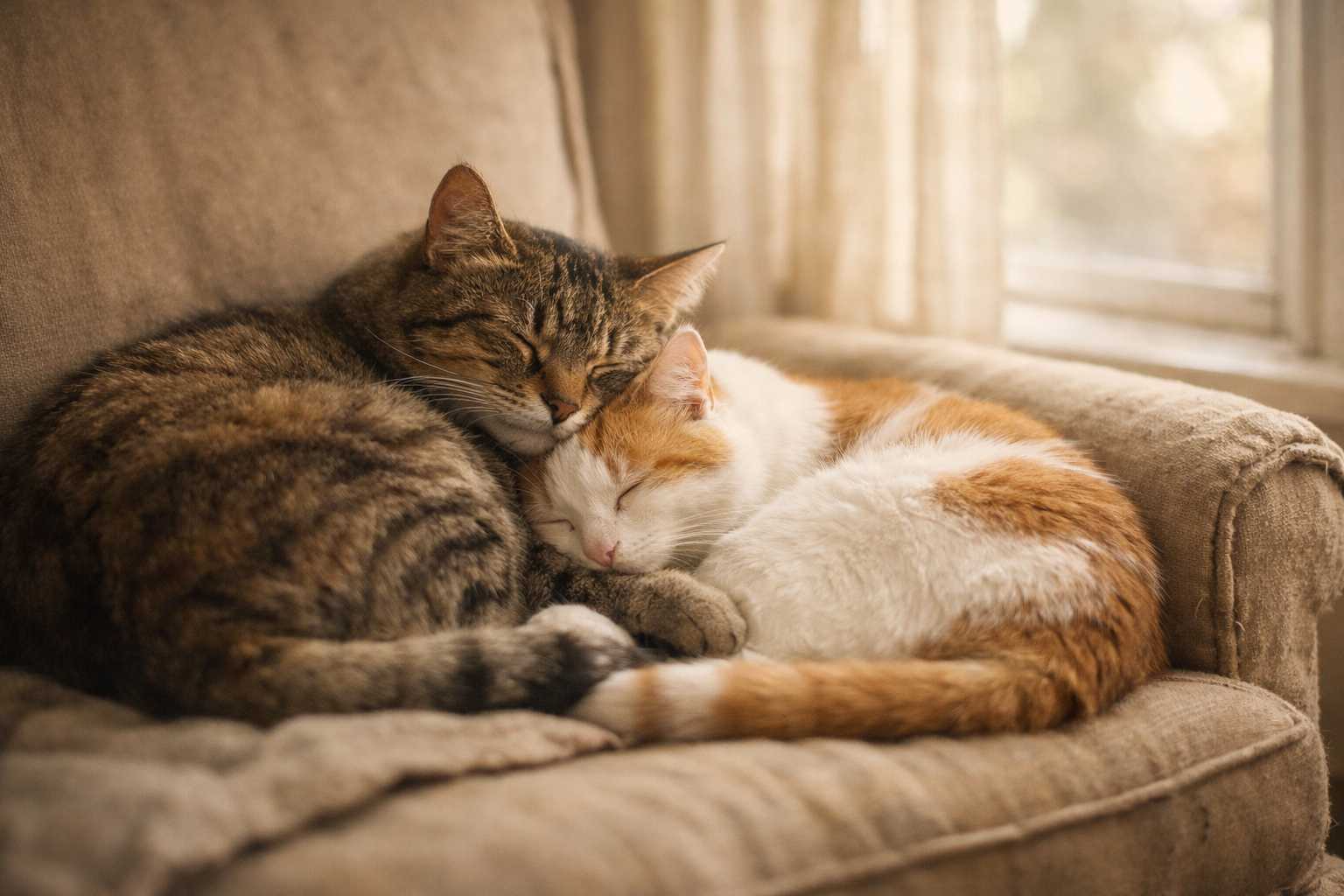
Losing a pet is heartbreaking. It can leave a deep silence in the home—not just for you, but sometimes for the animals who shared that bond too.
If you have two cats who are especially close, it is natural to wonder what happens when one of them dies. Does the surviving cat notice? Do they miss each other? Can cats grieve?
In many cases, yes—they can.
Cats may not express grief in the same way people do, but many do show clear signs of distress and behavioral change after losing a feline companion. Understanding those changes can help you support your cat with patience, comfort, and care.
What Does It Mean for Cats to Be Bonded?
Bonded cats have a close social relationship. They are more than housemates—they actively seek each other out and share comfort, security, and routine.
Signs of a bonded pair may include:
- sleeping curled up together
- grooming one another
- playing together regularly
- rubbing against each other
- eating or resting near one another
- looking for each other when separated
This kind of bond can develop between:
- littermates raised together
- cats introduced when they were young
- adult cats who gradually formed a strong attachment over time
When cats are closely bonded, their daily routines become connected. If one cat is suddenly gone, the other often notices that absence immediately.
Do Cats Really Grieve? What the Evidence Suggests
For many years, people underestimated cats’ emotional lives. Today, veterinarians and animal behavior professionals generally agree that cats can experience something very much like grief after the loss of a companion.
One often-cited survey from the ASPCA reported that many cats showed noticeable behavior changes after the death of another pet in the household, including altered sleep, appetite, vocalization, and affection-seeking. While this kind of research is based largely on owner observations rather than controlled experiments, it still supports what many cat guardians and clinicians have seen firsthand: cats can react strongly to loss.
So while science cannot measure feline grief exactly the way it studies human emotion, the behavioral evidence is compelling. Many cats do seem to mourn in their own way.
Signs Your Cat May Be Grieving
Grief in cats can look subtle or dramatic, depending on the cat’s personality and the relationship they had with the companion they lost.
Common signs include:
Searching for the Other Cat
A grieving cat may walk from room to room, sniff familiar resting places, or check spots where the other cat used to sleep or sit.
Eating Less
Loss of appetite is one of the most common signs of stress and grief in cats. Some may eat only a little less than usual, while others may stop eating altogether.
Increased Vocalization
Some cats become more vocal after a loss. They may meow more often, cry at night, or seem to be calling out.
Hiding or Withdrawal
Other cats become quieter and more reclusive. They may hide more, avoid interaction, or spend more time alone than usual.
Changes in Sleep
A grieving cat may sleep more than usual, seem restless, or struggle to settle into their usual routine.
Becoming More Clingy
Some cats turn to their humans for extra comfort. They may follow you around, want more physical closeness, or seem unusually needy.
Grooming Changes
Stress can affect grooming habits. Some cats overgroom, while others groom themselves less and begin to look unkempt.
Changes in Play or Activity
A cat who once played actively with their companion may become less interested in toys or daily activity.
It is important to remember that these signs can also point to illness, pain, or other medical issues—not just grief.
How Long Does Feline Grief Last?
There is no fixed timeline. Some cats begin adjusting within a few weeks, while others show changes for several months.
Many cats gradually return to their normal routines over time, especially with stability and support. However, if your cat seems deeply distressed, stops eating, loses weight, or continues to struggle for an extended period, speak with your veterinarian.
In general, grief-related changes should slowly improve—not worsen.
Why Some Cats Seem Unaffected
Not every cat shows obvious signs of loss.
Some appear unchanged after a companion dies. That does not always mean they felt nothing. Cats vary widely in how they process stress, change, and attachment.
A cat may seem unaffected because:
- the relationship was not as close as it appeared
- their grief is subtle and hard to recognize
- they are naturally reserved or stoic
- they are reacting more to the change in routine than to the loss itself
- they may even feel less stressed if the other cat was dominant or confrontational
Cats are individuals, and their responses can differ greatly.
Should You Let Your Cat See the Body?
Some behavior professionals believe that allowing a surviving cat to see and smell the body of a deceased companion may help reduce confusion and searching behavior. The idea is that it may give the cat a chance to understand that their companion is gone.
That said, this is not a requirement, and there is limited scientific evidence proving it helps in every case. If it is possible and feels right to you, it may be worth considering. If it is not possible, do not feel guilty. Cats can still adjust with time and support.
How to Help a Grieving Cat
If your cat is struggling after a loss, small, steady acts of comfort can make a real difference.
Keep the Routine Consistent
Cats feel safer when life remains predictable. Try to keep feeding, playtime, and bedtime routines as normal as possible.
Offer Extra Comfort
Spend a little more quiet time with your cat. Sit near them, speak softly, and offer affection if they want it.
Respect Their Space
If your cat is hiding or withdrawing, do not force interaction. Let them approach you when they are ready.
Encourage Gentle Enrichment
Interactive toys, food puzzles, scratching posts, and window views can help bring back interest and engagement.
Monitor Eating and Drinking
Watch carefully for reduced appetite or dehydration. Cats can become seriously ill if they go too long without eating.
Ask Your Veterinarian for Advice
If your cat is showing intense stress, appetite loss, or ongoing behavioral changes, your vet can help rule out medical issues and suggest ways to support them.
Consider Calming Support
Some cats may benefit from environmental calming aids such as pheromone diffusers. Ask your veterinarian which options are safe and appropriate.
When to Call the Vet
Do not assume every change is grief.
You should contact your veterinarian if your cat:
- stops eating for 24 hours or more
- seems lethargic or weak
- is vomiting or having diarrhea
- loses weight
- shows signs of pain or illness
- has severe or prolonged behavioral changes
Cats are very good at hiding illness, and stress can sometimes trigger or worsen health problems.
Should You Get Another Cat Right Away?
Usually, it is best not to rush.
A new cat may eventually become a good companion, but introducing one too soon can add stress to an already difficult adjustment. Your surviving cat may need time to settle into a new routine before meeting another pet.
If you are thinking about adopting again, wait until your cat seems emotionally and physically stable. Then consider their age, temperament, and social history before making a decision.
A new cat is not a replacement—and it is not always the right answer. For some cats, it helps. For others, it does not.
A Gentle Word for Grieving Pet Owners
Caring for a grieving cat while grieving yourself can be emotionally exhausting.
You may be carrying your own sadness while also worrying about whether your surviving cat is lonely, confused, or hurting. That is a lot to hold at once.
Try to be gentle with yourself. You do not need to do everything perfectly. What matters most is that your cat feels safe, loved, and cared for.
Often, your calm presence helps more than you realize.
Final Thoughts
So, do bonded cats grieve each other?
Very often, yes.
Cats can form deep attachments, and the loss of a close companion may affect them in meaningful ways. Some search, some hide, some become clingier, and some show only subtle changes. There is no single “right” way for a cat to grieve.
What matters most is recognizing the signs, keeping a close eye on your cat’s health, and giving them time, patience, and reassurance as they adjust.
With support, most cats do adapt to the loss—even if it takes time.