
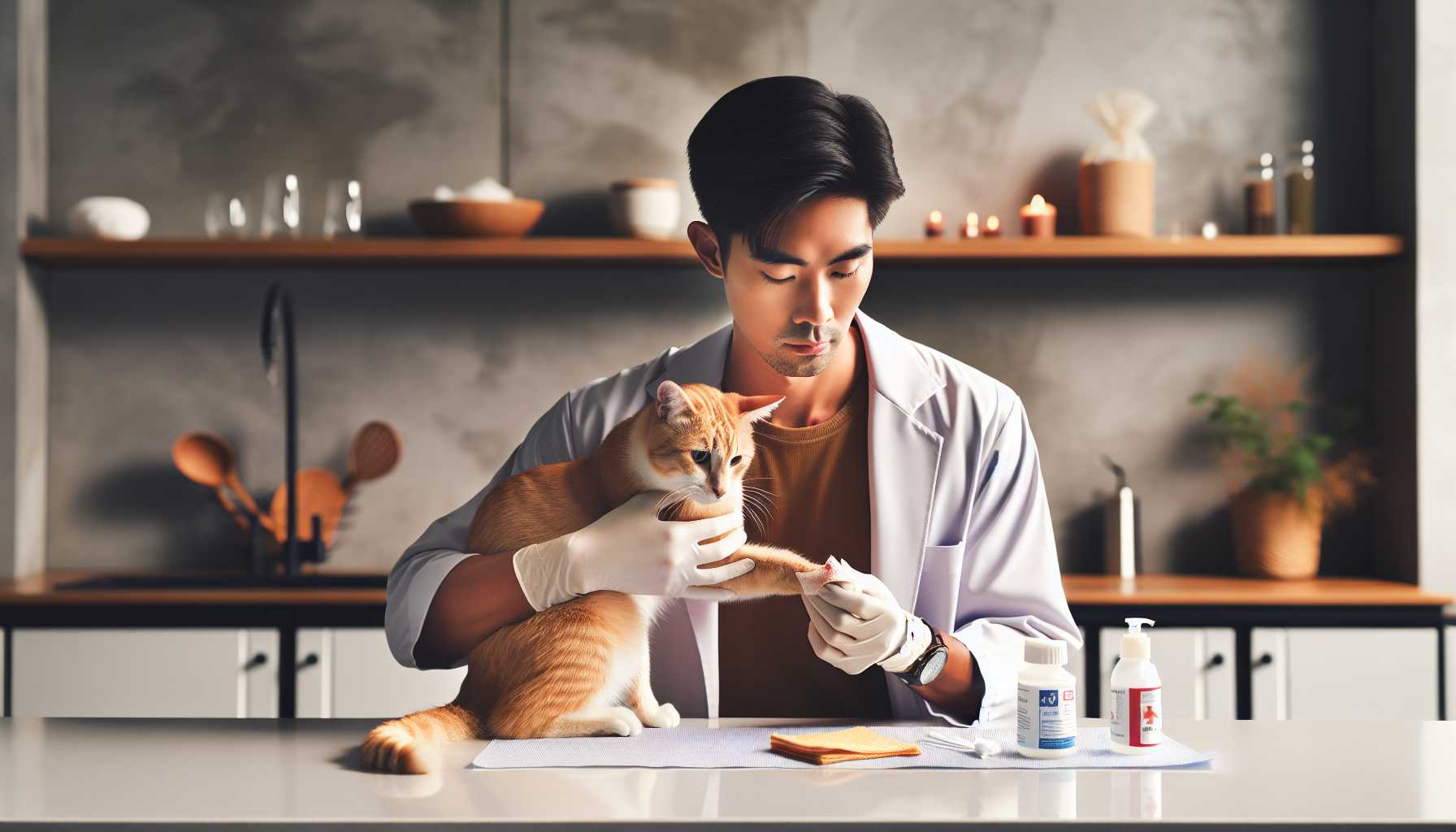
Have you noticed an inexplicable scratch or wound on your feline companion? There’s no need to panic! As a loving cat parent, understanding how to manage minor injuries can significantly impact your pet’s recovery. This article will take you through essential pointers about cat wound care that you can do at home.
Examining the Wound on Your Cat
Before diving right into treatment, it’s crucial to assess the situation. Is your little friend in discomfort? Look for indicators such as:
– Unusual meowing or hissing
– Concealing behavior
– Limping
– Visible bleeding or inflammation
– Changes in dietary habits
Preparing Your First Aid Kit
Every household with a pet should have the following essentials:
– Clean towels
– Sterile saline solutions
– Antiseptic wipes
– Ointment that is safe for pets to prevent bacterial infection
– Gauze pads
– Self-sticking bandages
– Cat recovery cone (E-collar)
Wound Cleaning Steps
Treat your vulnerable friend with extra caution:
1. Restrain your cat gently using a towel
2. If required, trim the fur encompassing the wound
3. Clean the injured area with a saline solution
4. Dry gently with a sterile gauze
5. Apply an antiseptic tailored for pets
Treatment Application
Keep the approach mild and uncomplex:
– Use an antibiotic ointment suitable for pets
– If bleeding, apply mild pressure
– Bandage lightly if required
– Use a protective cone to prevent self-licking of the wound
Overseeing the Healing Process
Stay alert for these cautionary signs:
– Escalated inflammation
– Presence of purulence or discharge
– High temperature
– Decreased appetite
– Unusual fatigue
Deciding When to Consult a Vet
Don’t postpone seeking professional assistance if:
– The wound appears deep or extensive
– There is profuse bleeding
– Your cat exhibits signs indicative of an infection
– The injury results from a confrontation with another animal
– Your cat appears to be unusually troubled
Proactive Care Advice
Protect your adorable feline by:
– Trimming their nails regularly
– Tidying up loose items in the house
– Monitoring them while they play outside
– Keeping updated with their vaccinations
– Regular health inspections
Remember, your pet looks towards you for comfort and safety. Although minor injuries can often be managed at home, always trust your own judgment. If you are uncertain, it’s always better to contact your vet instead of risking further complications.
Having a comprehensive first aid kit and maintaining your composure during emergencies will equip you to provide the best care for your cherished cat. They aren’t just pets after all – they’re part of the family too! 🐱❤️
*Disclaimer: This article is a guide for minor injuries only. Serious wounds necessitate immediate veterinary attention.