
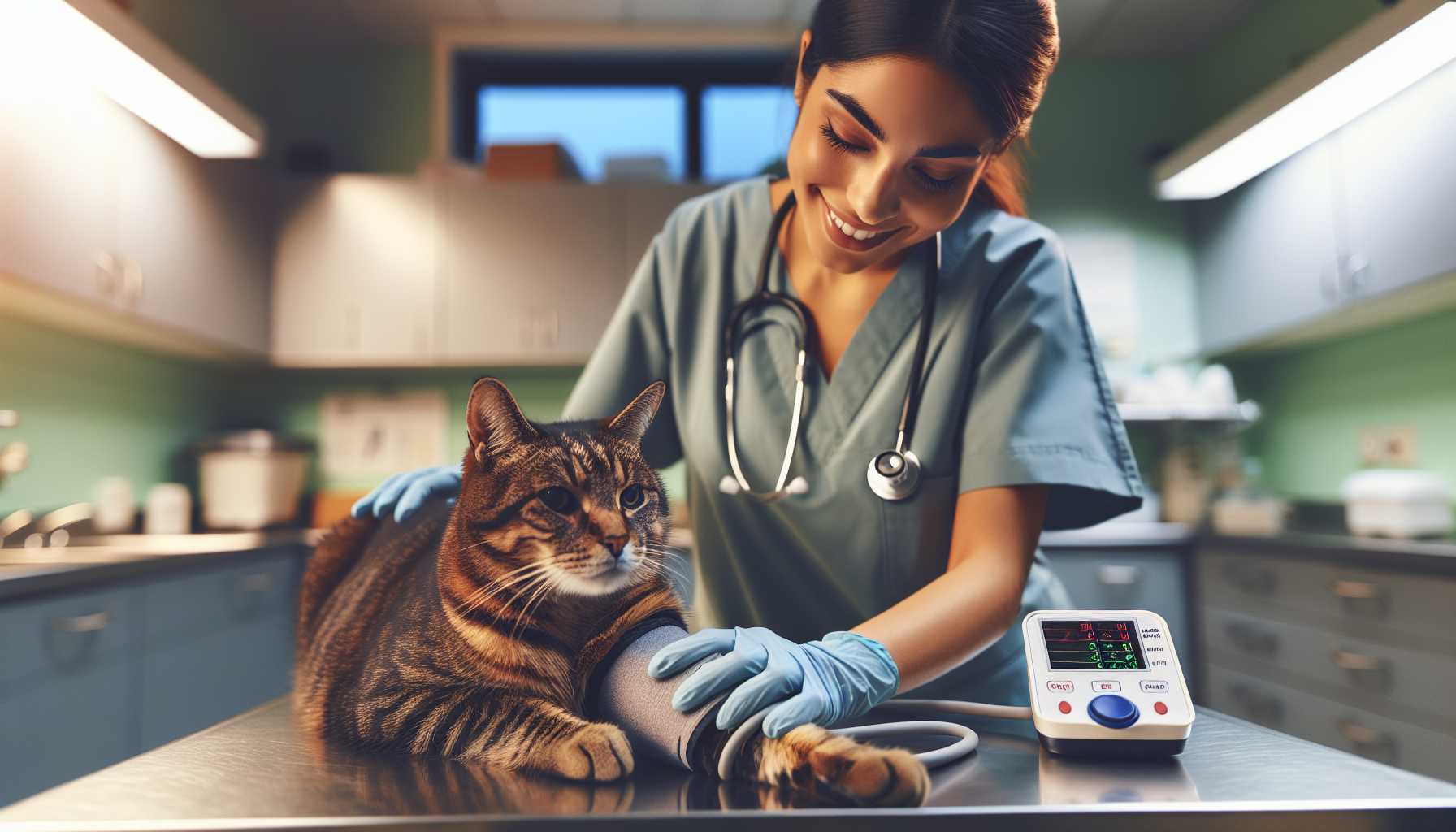
It’s not just humans who require their blood pressure to be checked. Our feline companions too need to regularly monitor their blood pressure to maintain their cardiovascular health.
The Importance of Monitoring Your Cat’s Blood Pressure
Your cat’s blood pressure provides significant insights into its overall health. High blood pressure can develop stealthily, inflicting damage on crucial organs. Regular blood pressure checks can help detect issues at an early stage, particularly in older cats.
What is the Normal Blood Pressure for Cats?
Wondering what’s standard blood pressure for your feline friend? Here’s a simple breakdown:
– Normal Blood Pressure: 120-130/70-80 mmHg
– Borderline Blood Pressure: 150-159/95-99 mmHg
– High Blood Pressure: 160+/100+ mmHg
Warning Signs of High Blood Pressure in Cats
Keep an eye out for these red flags:
– Unexpected vision problems
– Uncharacteristic crying
– Disorientation
– Increased thirst
– Changes in eating habits
Measuring Blood Pressure in Cats: The Method
The procedure is far more harmless than you may think. Veterinarians utilize a small cuff placed on your cat’s leg or tail for measurement. It’s akin to the method used for humans, albeit modified for our petite furry companions.
Feline Hypertension: Risk Factors
Certain cats are more prone to developing high blood pressure:
– Senior cats (aged 7 and above)
– Cats suffering from kidney diseases
– Overweight cats
– Cats battling thyroid issues
When to Consult a Veterinarian
Schedule an appointment if you notice:
– Any of the above-mentioned symptoms
– Routine wellness checks for cats aged 7 and above
– Blood pressure assessment after the diagnosis of other ailments
– Changes in your cat’s behavior or overall health
Tips for Home Monitoring
Although you can’t measure your cat’s blood pressure at home, there are other ways to monitor their health:
– Maintain a health diary
– Keep a check on their water consumption
– Observe any changes in their behavior
– Monitor their eating habits
Preventive Measures and Management
You can ensure your cat maintains healthy blood pressure levels by:
– Helping them maintain an ideal weight
– Encouraging regular exercise
– Providing a stress-free environment
– Ensuring a balanced diet
– Taking them for regular veterinarian check-ups
Living with a Hypertensive Cat
Don’t fret! Many cats lead content lives with well-managed blood pressure. All it takes is to be steady with:
– Medication schedules
– Dietary modifications
– Regular health monitoring
– Vet visits
Bear in mind, your vet is your most dependable ally in ensuring your furry companion stays healthy and chirpy for years to come!
Wrapping Up
Keeping an eye on your cat’s blood pressure is an integral part of their health and wellness routine. Stay vigilant, schedule regular vet visits, and shower them with affection. Your attention to their wellbeing will help secure several more joy-filled, purrfect years together! 🐱❤