
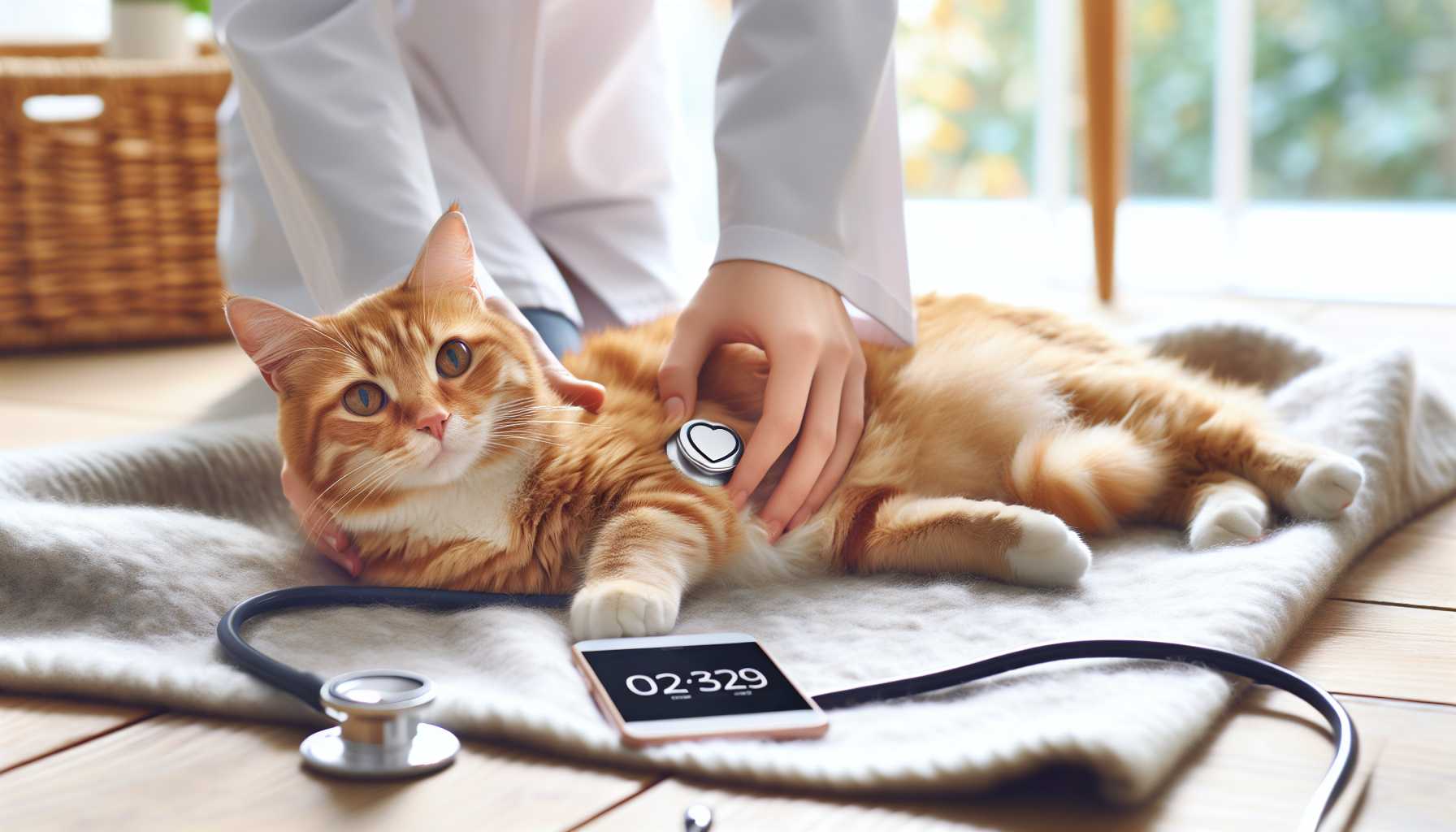
Worried about the rhythm of your feline friend’s heartbeat? This essential guide to your cat’s heart rate will shed light on the necessary information you need to ensure your pet stays healthy and vibrant.
So, What Is Considered a Normal Heart Rate for Cats?
Usually, the heart of your cat should pound between 140-220 times per minute while they are at rest, which is significantly faster than ours! It’s not out of the ordinary for young kittens and excited cats to exhibit even higher heart rates.
Easy Steps to Determine Your Cat’s Heart Rate at Home
To monitor your cat’s heart rate, follow these straightforward steps:
– Ensure your cat is calm and at ease
– Gently place your hand on their left side, directly behind their front leg
– Count the palpitations for 15 seconds
– Multiply this figure by 4 for the per-minute rate
Here’s a practical tip: Utilize your smartphone’s timer to simplify the counting process!
Aspects Which Can Alter Your Cat’s Heart Rate
A variety of factors can accelerate your cat’s heart rate:
– Vigorous activities or play periods
– Stress or anxiety episodes
– Ambient temperature fluctuations
– Eating habits
– Age-related changes
– Your cat’s size and weight
Potential Red Flags Your Cat’s Heart Rate May Indicate
Pay attention to these worrying signs:
– An exceedingly fast heart rate while at rest
– An unusually slow heart rate
– Erratic heart rhythm
– Noticeable lethargy
– Breathing difficulties
– Decreased appetite
When It’s Time to Seek Veterinary Attention
You should reach out to your vet without delay if you observe:
– A consistent resting heart rate that surpasses 220 beats per minute
– A heart rate below the 140 beats per minute mark
– Inconsistencies in the rhythm of heartbeats
– Any combination of the aforementioned warning signs
How to Foster Heart Health in Your Cat
Promote heart health in your feline with these straightforward methods:
– Regular veterinary appointments
– A balanced, nutritional diet
– Encouraging daily physical activity and play
– A tranquil, stress-minimizing environment
– Proper weight management
– Ensuring fresh water is always available
The Importance of Frequent Monitoring
Incorporating heart rate checks into your monthly routine with your cat is a proactive way to monitor their health and wellbeing. Your cat relies on you as their caretaker, so making this a habit is not just advantageous—it’s essential.