
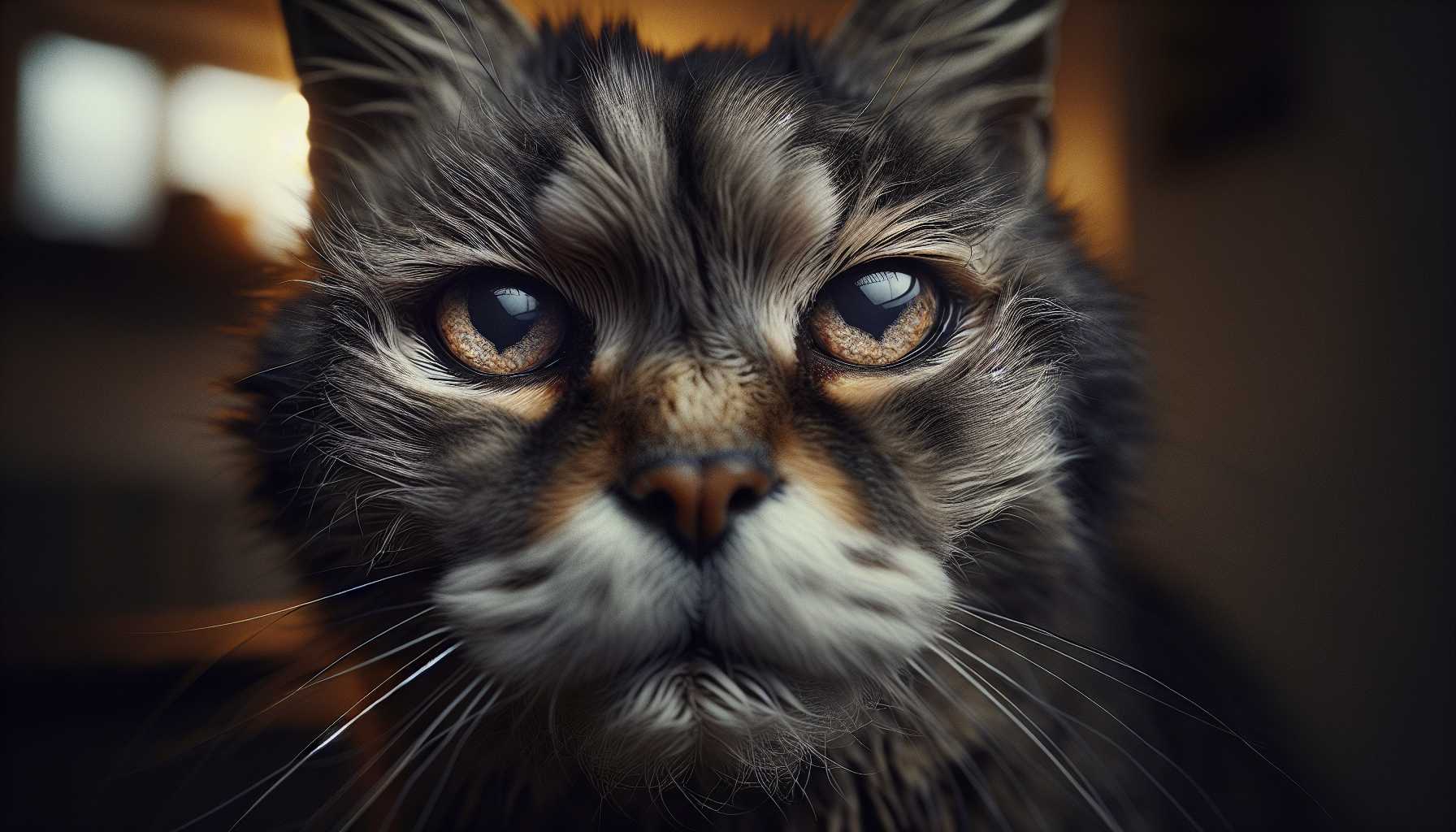
Just as with humans, aging cats face a decline in the quality of their vision. Watching a beloved pet struggle with eyesight issues can be painful, but gaining an understanding of these changes can equip owners to provide better care.
How Vision in Cats is Affected by Aging
Remember how adeptly your kitty used to snatch a toy out of the air? As cats age, their previously quick reflexes slow and their once razor-sharp vision becomes less precise. Most cats start exhibiting changes in their vision roughly between the ages of 7 and 10.
The typical indicators of aging vision in cats include:
– Eyes that appear cloudy
– A struggle to see clearly in low light
– A decrease in depth perception
– A reduced ability to track fast-moving items
Indications Your Elderly Cat is Experiencing Vision Difficulties
Be on the lookout for these key signs:
– Stumbling into furniture
– Missing their usual landing spot when leaping
– Being easily startled
– Hesitation when facing stairs
– Becoming increasingly clingy
– Eyes that are dilated or appear cloudy
Common Vision Issues in Aging Cats
Cataracts
This condition, characterized by cloudy formations on the eye lens, can blur your cat’s vision. Cataracts usually present as a white or bluish fog in your cat’s eyes.
Glaucoma
This painful issue is caused by increased eye pressure. Spotting this early is key in preventing permanent loss of vision.
Retinal Degeneration
The gradual breakdown of the cat’s retina can compromise its ability to process light and images.
Strategies for Assisting Your Cat
The following steps can make life less challenging for a cat struggling with vision loss:
- Maintain a stable environment
- Install night lights in dim areas
- Place soft mats around their favorite spots
- Stick to a set feeding schedule
- Speak to them when you’re approaching to avoid startling them
Available Treatments
Fortunately, modern veterinary medicine presents several options:
– Prescribed medication for specific conditions
– Surgical procedures to address cataracts
– Supplements aimed at promoting eye health
– Regular health checks
Making Your Home Safe and Comfortable
Your home should serve as a sanctuary for your cat facing vision loss:
– Refrain from moving furniture around
– Ensure clear spaces to move in
– Use scent markers to guide them
– Keep food and litter trays in easy-to-reach areas
When to Consult with a Veterinarian
Seek professional help immediately if you observe:
– Sudden shifts in behavior
– Redness in the eyes or discharge
– Squinting or rubbing at their eyes
– Alterations in the size or look of their pupils
Offering Love and Support
Remember, despite their vision loss, cats are surprisingly adaptable. With your compassion and support, they’re able to live a full and happy life. They’ll appreciate your ongoing patience and love, as they need it now more than ever.
Concluding Thoughts
Though aging is unavoidable, you can significantly enhance your cat’s quality of life by understanding and addressing vision issues. Keep alert to changes and work closely with your vet to give your furry friend the best care possible.
Remember that you’re not alone. Other cat owners face similar struggles, and there are veterinary professionals as well as support communities available to help.